Economics & History
Economic Policies

Following a classical rhetorical structure, this text critiques America's use of neoliberal economic policies and military interventions abroad, arguing they primarily serve U.S. strategic interests at the expense of global equity, stability, and the welfare of other nations.

As automation threatens widespread job displacement, implementing a universal basic income can ensure economic security, distribute productivity gains equitably, address rising inequality, and uphold core American values of economic liberty and human dignity.

History

Akbar's reign inaugurated transformative administrative reforms like the Mansabdari system and religious policies promoting tolerance, but also sparked controversy through attempted spiritual syncretism that challenged Islamic orthodoxy, contrasting popular portrayals that idealize or vilify him.

As Shivaji revived Hindu sovereignty through strategic resistance against Mughal dominance, he embodied bravery, political acumen and a distinctly Marathi identity, transcending reductive labels that overlook his nuanced legacy of cultural cohesion and secular governance.

Architecture & Art History
Ancient Architecture

The Great Sphinx of Giza, an awe-inspiring synthesis of leonine and human forms carved from living rock, epitomized Old Kingdom Egypt's architectural ingenuity while assuming layered symbolic meanings as a focus of devotion across subsequent eras.
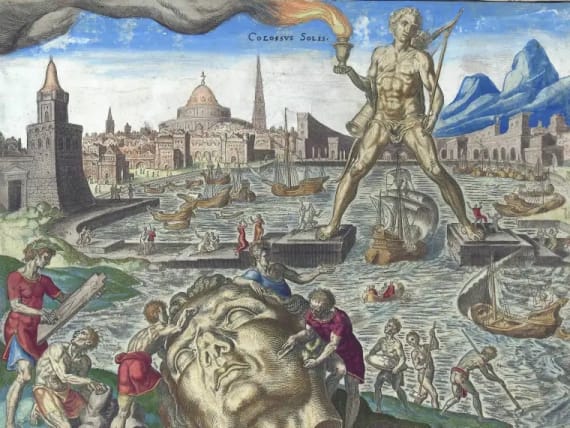
The Colossus of Rhodes, one of the Seven Wonders, embodied the Hellenistic era's technological prowess, artistic sophistication, and prosperity through its unprecedented scale, innovative construction techniques, and symbolic significance as a monument to the island's victory.

The Arch of Constantine, ingeniously blending spoliated classical elements with new sculptural reliefs, manipulated the urban fabric of Rome through its strategic orientation to promote Constantine's brand of imperial legitimacy and monotheistic syncretism.

The Flavian Amphitheatre, or Colosseum, exemplified Imperial Roman ingenuity through its innovative engineering, fusion of function and grandeur, and symbolic reflection of the empire's social hierarchies, making it an iconic landmark of ancient architectural achievement.
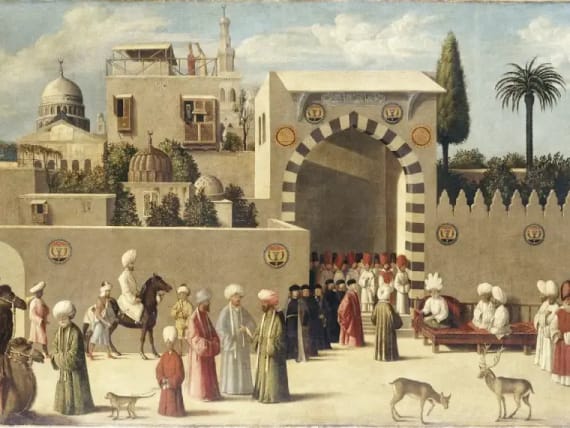
The Great Mosque epitomized the ascendant Umayyad dynasty's architectural synthesis of Islamic, Byzantine, and Roman traditions into an innovative religious prototype that fused temporal and spiritual authority while proclaiming Syrian cultural primacy.

The monumental Aqueduct of Segovia showcased Roman mastery of engineering, materials, and aesthetics through its imposing yet graceful arcade carrying water into the city, while embodying the practical ambitions that characterized Imperial Roman architecture.
Renaissance and Baroque Architecture

San Marco in Venice embodies the city's amalgamation of Byzantine, Islamic, and Western European architectural traditions into a cohesive expression of Venetian identity, with its Greek cross plan, resplendent mosaics, and symbolic assertion of an independent maritime power.

Commissioned by Cosimo de' Medici in the 1440s, the Palazzo Medici Riccardi exemplified the Italian Renaissance's revival of classical forms and innovative palace architecture, harmoniously blending Roman influences with a Florentine style that projected the Medici family's political aspirations and cultural patronage.

The Château de Chambord, an iconic French Renaissance masterpiece, embodies the rivalry, cultural exchange, and architectural innovations of 16th century Europe. Despite its initial lack of use, Chambord endures as a testament to the era's complex web of political ambitions, artistic influences, and France's assertion of cultural dominance through the adoption of Italian Renaissance design.

Jacob van Campen's Amsterdam Town Hall embodied the Dutch Republic's mercantile ascendancy and pioneering embrace of Baroque classicism through its monumental yet restrained architecture, reflecting Protestant pragmatism and the nation's trailblazing republican ideals.
Modern Architecture

Following the evolution of 20th century creative movements, this essay argues that contemporary architecture is largely driven by corporate interests and has become disconnected from human needs and cultural identity.
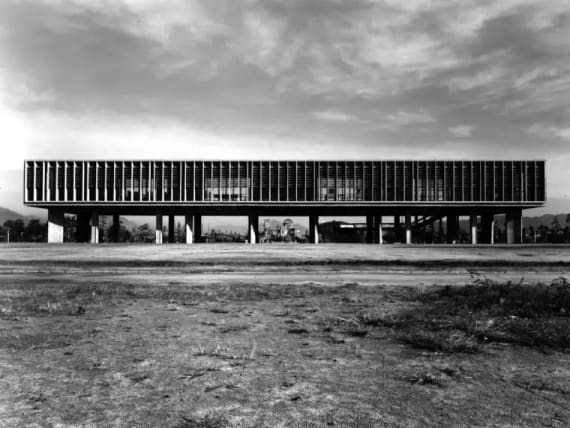
Kenzo Tange's Hiroshima Peace Memorial Park, centered on its iconic concrete structures, negotiated between modernist principles and cultural traditions, crystallizing Japan's turbulent postwar quest for national identity through a potent synthesis of architecture and ideology.

Mies van der Rohe's iconic Farnsworth House crystallized his modernist vision through its minimalist form, seamless integration with nature, and masterful use of industrial materials, though its open plan posed challenges to practical considerations of privacy and comfort.

A spotlight onto one of my personal favorite architectural feats, "La Maison de Verre", a distinctive residence constructed in Paris from 1928 to 1931 during the industrial end to the prosperous Belle Époque.

This landmark skyscraper in New York City, with its minimalist geometries, expressed structural frame, and pristine curtain wall, set a new standard for the modern corporate office tower and profoundly influenced subsequent high-rise architecture.
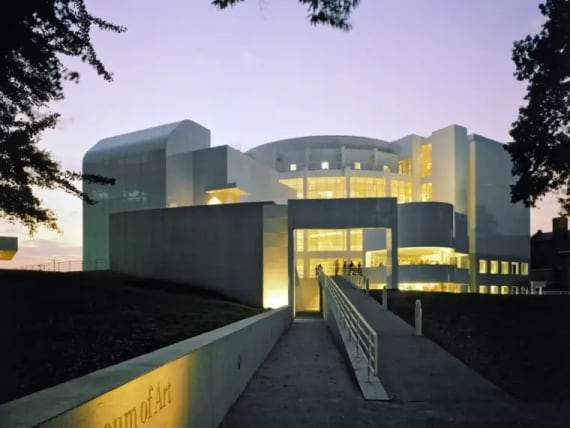
The Michael C. Carlos Museum and the High Museum of Art showcase the evolution of postmodern and late modernist architecture in Atlanta, with designs by Michael Graves, Richard Meier, and Renzo Piano.
French Topics
Psychoanalysis & Literature
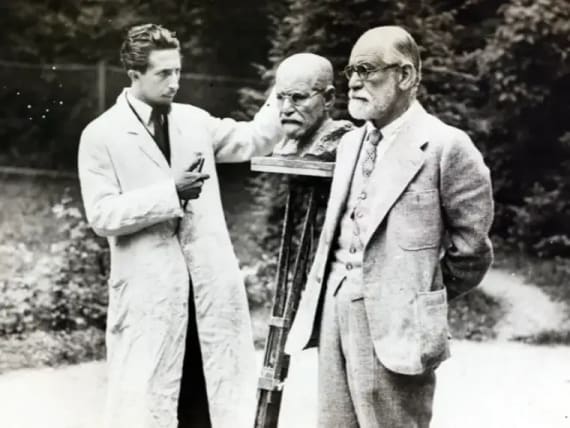
Sigmund Freud details his development of psychoanalysis and the unconscious mind through case studies of patients like Emma, pushing back against clinical psychiatry's disregard of symbolic meaning behind neurotic symptoms in favor of recognizing their relation to past psychosexual experiences.

In Honoré de Balzac's short story "Adieu," linguistic symbolism and narrative chronicle the dehumanizing effects of the Napoleonic Wars, acting as a metaphorical exploration of post-Revolutionary French society's attempts to reconcile its glorified past with the realities of trauma.
Surrealism & the Avant-Garde

Guillaume Apollinaire's poem "Wonder of War" captures the front line horrors of World War I with an avant-garde, dissociated perspective, embodying the proto-Surrealist ethos through metaphysical introspection, acknowledgement of violence, and poetic visions intertwined with material reality.

Arthur Rimbaud's proto-Surrealist poem "Départ" crystallizes societal dissatisfaction with materialism and intellectual pursuits, navigating industrialization's disruption of traditions and urban culture, while rejecting artistic confines like Romanticism in search of existential authenticity.
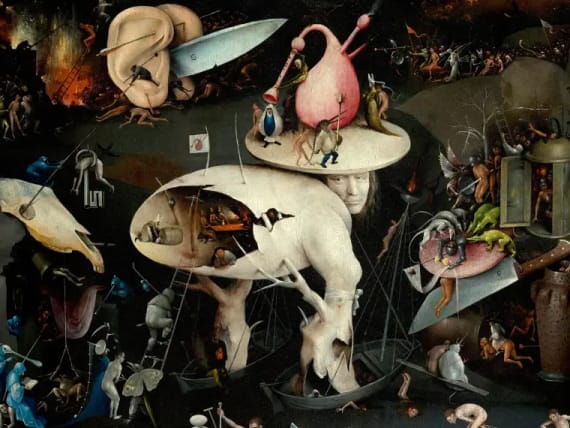
Hieronymus Bosch's "The Garden of Earthly Delights" triptych subverts traditional religious iconography to psychologically explore human desire, sin, virtue, and identity fragmentation, foreshadowing modern perspectives on sexuality and the unconscious mind.
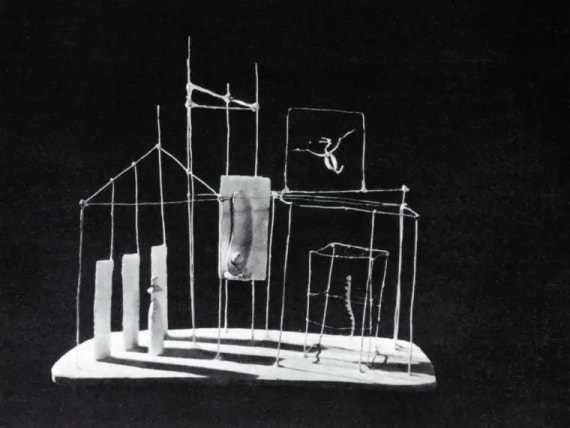
Alberto Giacometti's sculpture captures Surrealist tenets through materiality juxtapositions, asymmetric spatiality evoking the dreamscape, and personal symbolism transcending to universal truths about existence, memory, isolation, and the subconscious mind.
Historical & Political Analysis

Tracing the history of terrorism in France from dissident paramilitary groups to Islamic jihadists, this text examines how the evolution of radical organizations and their underlying ideologies posed an enduring national security threat shaped by France's international affairs and policy approaches.

This text explores the political, economic, and social impacts of French colonial policies during the 19th-20th century "Scramble for Africa," analyzing how exploitation, discrimination, and racial subjugation catalyzed radical anti-colonial sentiment, violent struggle for independence movements, and upheaval of African societal traditions.

Written in the style of 15th century essayist Montaigne, this creative work on materialism and consumption culture juxtaposes opposing perspectives, from embracing transient pleasures within the capitalist system to decrying soulless corporate greed.

Michel de Montaigne's essays "Des Coches" and "L'inégalité qui existe entre nous" use the concept of Knightian Uncertainty to critique the materialism, inequality, and exploitation inherent in European colonialism, highlighting the ethical dilemmas and uncertainties surrounding the economic systems and cross-cultural encounters of that era.
Miscellaneous
Rhetoric & Analysis

By analyzing Molière's The Misanthrope and Aristophanes' Wasps, this essay demonstrates how the protagonists' tragic flaws serve as powerful vehicles for satirizing societal hypocrisy and human folly while adding depth and nuance to the comedic works.

This essay presents a scathing rhetorical critique of the internet's evolution from its early idealistic roots to its current state as a commercialized symbol of surveillance capitalism.

Modeled after a letter/address to a friend, this essay explores how corporations employ Aristotelian rhetorical strategies in their public relations efforts, particularly in the context of corporate social responsibility.
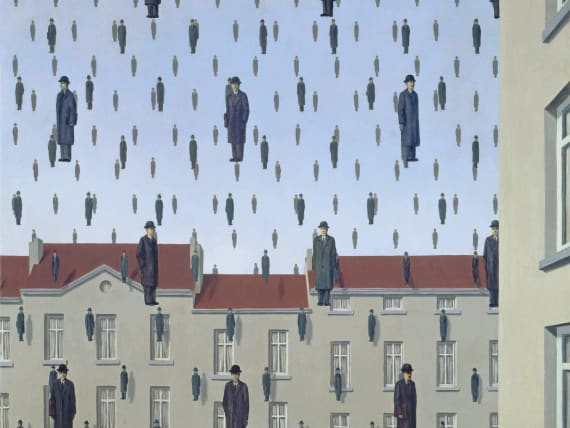
Explores how Gabriel García Márquez and Franz Kafka employ diverse literary techniques to represent both conventional and conceptual realities, transforming local or abstract narratives into universal truths and ontological insights.



Social & Political Issues
Critiquing the militarized approach and harsh criminal penalties of America's War on Drugs, which disproportionately impacts minorities and fails to rehabilitate victims, this text advocates treating addiction as a public health crisis necessitating welfare-based solutions.
America's Longest War
Post-colonial instability in Africa stemmed from colonial legacies fragmenting indigenous societies, manufactured borders, extractive economic policies, ethnic tensions exacerbated by divide-and-rule tactics, and Cold War interventionism obstructing developmental visions.
Road to Independence
European colonial powers exploited Africa's trade networks and natural resources through oppressive extraction methods and selective infrastructure investments solely facilitating resource exports, perpetuating economic subjugation under the guise of development.
Africa’s Economic Allure
While anti-colonial movements pioneered decolonization energized by Pan-Africanism, the newly independent African nations confronted immense challenges including Cold War rivalry, ethnic fragmentation, lack of economic sovereignty, and imposed neoliberal reforms.
Following Decolonization
Rhodesia epitomized entrenched racial oppression as the white minority regime propagated Orientalist narratives asserting European superiority to perpetuate exploitative socioeconomic hierarchies and deny the black majority basic rights and liberties.
Rhodesia’s Symbolism
Frederick Cooper analyzed how initial post-independence African "horizontal solidarity" among local communities enabling decolonization struggles was undermined by former rulers reasserting destabilizing "vertical" neocolonial economic and political control.
Postcolonial Connections