Terrorism in France
Spring 2022
Terrorism is widely regarded as the use of violence and fear to achieve an often fanatical ideological or political objective. In the case of France, terrorism is directly connected and incited by the nation’s contemporary international affairs and overall political approach. The threat of this extremism in France is considered a present and immediate danger as President Emmanuel Macron raised the national alert system to the highest level in October 2020, following a spree of brutal terrorist attacks. However, France’s terroristic threat does not just exist as an abruptly recent political phenomenon, but has rather been a consistently looming national crisis throughout the course of modern history. Since the 1960s, radical ideologies and ensuing terrorist attacks on France have evolved from an amalgamation of various extremist nationalist groups and independent operators, to being dominated by actively hostile and, comparatively, well-sponsored Islamic jihadist organizations.
The true inception of France’s extremist threat directly stems from the Algerian War and its vast domestic social and political implications during the mid 20th century. Prior to the beginning of the war in 1954, Algeria had long existed as a uniquely legally integrated part of France’s larger colonial empire and, typical of European colonial powers, the colony had been subject to extreme measures of violence and racial oppression. Frantz Fanon is a 20th century Martinicain political theorist and psychiatrist and, in the course of his psychiatry work in French Algeria, he became a fervent supporter of decolonization and Pan-Africanism. In his 1956 letter of resignation from practicing psychiatry for the colonial French government, he writes “If psychiatry is the medical technique that aims to enable man no longer to be a stranger to his environment, l owe it to myself to affirm that the Arab, permanently an alien in his own country, lives in a state of absolute depersonalization” (Fanon 64). Fanon’s desolate acceptance of his ineffectiveness shines clarity on the helpless colonial situation that left indigenous Algerians so detached from their native roots that they had lost a sense of identity.
This enduring colonial history of “a systematized dehumanization” (Fanon 64) and unfulfilled French promises of increased Algerian self-governance ushered in a bitter and deep-rooted Algerian nationalism as well as intensified calls for formal decolonization. These liberation movements were given further motivation to act when, in 1954, France lost their grasp on French Indochina after a nearly decade-long conflict in Southeast Asia. In late 1954, mere months after the decolonization of French Indochina, the Algerian War was officially underway after the Front de Libération Nationale (FLN) engaged in a series of guerilla attacks known as the Toussaint Rouge.
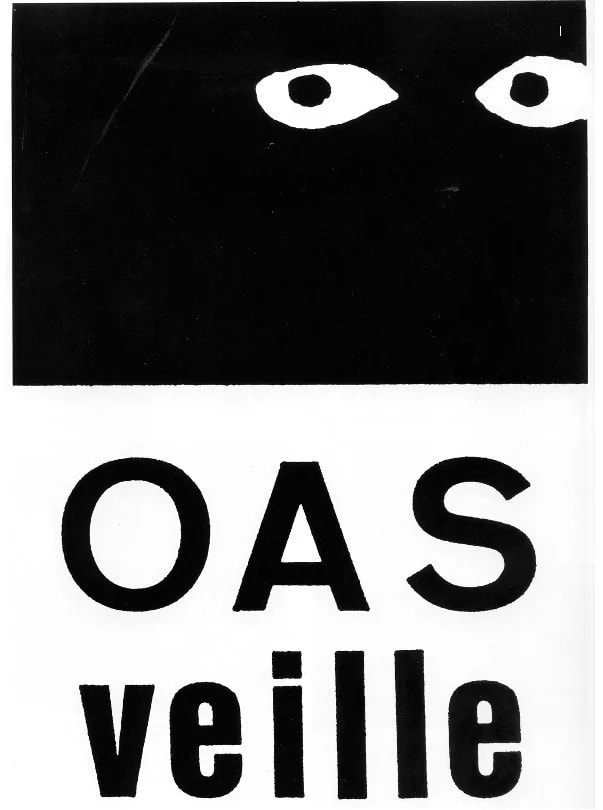
The war took place entirely on Algerian territory, and the conflict’s 8 year duration was characterized by extreme brutality unleashed by the French armed forces in a bid to conserve their dissolving empire. France’s callous use of violence and torture against the FLN caused a rapid deterioration of support for the war in metropolitan France and in non-revolutionary inhabitants of Algeria. However, their inhumane military campaign didn’t just squander positive sentiment for the war, but it also heightened ideological divisions over Algerian independence. This political aggravation would become the primary catalyst for the initial encroachment of modern foreign terrorism into French borders when, in June 1961, a bomb exploded on the Paris-Strasbourg passenger train. The bombing killed 28 travelers and injured over 100 more, and the Organisation Armée Secrèt (OAS), a French dissident paramilitary organization, claimed responsibility.
The OAS was formed in early 1961 by various high-ranking French military officials, fascists, and former Vichy collaborators, as an adverse reaction to the French referendum on self-determination for Algeria. They carried the motto of L’Algérie est française et le restera, and utilized mass violence across both Algeria and France in efforts to counter the FLN and deter Algerian independence. In addition to the train bombing, the OAS engaged in political assassinations that left 2,000 dead between 1961 and 1962. The OAS is one of the initial examples of terrorism in mainland France as well as being an example of developing radical nationalism and dissidence that serves as the essential foundation of the domestic terrorist threat in France.
Following the Evian Accords and official Algerian independence in 1962, OAS terror attacks fizzled out as they failed to produce legitimate political resistance to the dissolution of the French colonial empire. France saw a short period of nonviolence through the latter half of the 1960s, but spiteful sentiments over Algeria remained simmering in the nation. Hostilities arose again nearly a decade later, in December 1973, when the Charles Martel Group bombed the Algerian Consulate in Marseilles, killing 4 and injuring 20. The Charles Martel Group, a far-right domestic terrorist organization, shared the views of the earlier OAS in regards to both Algerian independence and a general animosity towards native Algerian migrants in France. The group engaged in further attacks throughout the 1970s, but failed to effectively induce terror on a national scale. Overall, the Charles Martel Group is symbolic of the development and entrenchment of defiant, ultranationalist ideology in France.
Furthermore, while The Charles Martel Group remained ineffective in the rest of their terrorist attempts, the revolutionary spirit of the 1970s still saw the inception of new and increasingly radical domestic and foreign terrorist threats in France. After the Algerian War came to a conclusion, the world was still in the midst of decolonization efforts and constant geopolitical strife. French author Annie Ernaux recounts in her 2008 autobiography, Les Années, her anecdotal experiences with the encompassing culture of conflict and extensive political change during the 1960s-1970s and how “young people all over the world were making themselves heard with violence” (Ernaux 96). While these revolutionary youths were attempting to zealously tear down standing social orders, Annie Ernaux discusses the contrasting experience felt by the French people. She writes “The troubles in Algeria had just ended. They were sick and tired of war, and watched uneasily as Israeli tanks mowed down Nasser’s soldiers, confused by the return of a situation they had thought settled, and by the transformation of victims into victors” (Ernaux 96). The aftermath of the Algerian War‘s undisguised brutality and protracted duration had left the French with little tolerance or understanding for senseless violence. Nevertheless, it would be those same Israeli tanks that Annie Ernaux watched mow down Egyptian President Gamal Nasser’s troops that would ultimately bring excessive bloodshed back to France.
In the mid 1970s, France experienced the first international terrorist attack in contemporary French history following the Six-Day War in 1967 and the subsequent Israeli occupation of Palestine. Between 1974 and 1975, the Popular Front for the Liberation of Palestine (PFLP), a subgroup of the Palestine Liberation Organization (PLO), targeted Jewish populations in France with multiple bombings and hostage situations that left 4 dead and almost 60 people injured. These attacks were in cooperation with Carlos the Jackal, a leading radical Marxist terrorist, who supported and mobilized the PFLP and PLO in instilling Anti-Zionist and Islamic terrorism in France. These recently developed Islamic terrorist organizations prompted a controversial French policy towards terrorism known colloquially as the sanctuary doctrine, “where those apprehended for terrorist offenses related to the Palestinian question typically received only light penalties” (Gregory). The actions of Carlos the Jackal and the affiliated Palestinian terrorist cells during this period marked the introduction of international, well-organized, radical terrorist groups into France.

The 1970s also saw the introduction of small-scale but impassioned indigenous separatist groups that orchestrated an array of domestic terrorist attacks. Various militant indigenous organizations with separatist objectives formed during this time period, including the Armée Révolutionnaire Bretonne (ARB), but the greatest and most sophisticated threat was The Front de Libération Nationale Corse (FLNC). The FLNC was formed in 1975 by Corsican nationalists who felt that France had ignored the declining population and stagnant economy of the island. The FLNC advocated for severe military action to achieve an independent Corsica, and the first Corsican terrorist attacks occurred in 1976 with 21 individual bombings across the island. Since then, the FLNC continuously employed violent acts in their struggle for independence from France, such as the 1998 assassination of the highest French government official in Corsica, Claude Erignac. French separatist groups “have been the most persistent and consistent perpetrator of terrorist acts in France, committing hundreds of attacks over the years. However, they are also the least deadly, usually concentrating their attacks against property” (Shapiro & Suzan 69). These ineffective nationalist movements display a deterioration of French domestic terrorism from the treacherous far-right ultranationalism that dominated the 1960s, to minor indigenous separatist groups that utilized petty crime and small-scale terrorist attacks in feeble attempts at gaining autonomy.
Moving forward, the 1980s and 1990s oversaw the continuation of these French separatist movements and additional incidents of violence from far-left groups, like Action Directe. However, these movements and attacks are relatively inconsequential, and are eclipsed by the vast expansion and magnified presence of Islamic terrorism during this period. At the beginning of the 1980s, France experienced the reemergence of Carlos the Jackal, who had been expelled from the PFLP after operational failures during a 1975 raid on the OPEC Headquarters in Vienna. Carlos subsequently sought out and gained financial support from Muammar Gaddafi’s Libya, Ba’athist Iraq, and Ba’athist Syria, in order to form a new terrorist cell: the Organization of the Armed Arab Struggle (OAAS).
Carlos the Jackal and OAAS were responsible for the 1982 Capitole Bombing, the April 1982 Paris Car Bombing of an Anti-Syrian newspaper office, and the 1983 TGV Train and Marseille Station Bombings that, in total, claimed a combined 11 lives. These attacks were in retaliation for the arrests of Carlos’ wife Magdalena Koppand and Pro-Palestine accomplice Bruno Breguet by French officials; in addition, the attacks also gained retribution for the French bombing of a PFLP training camp in Lebanon as Carlos still maintained relations with the group following his expulsion. The resurgence of Carlos the Jackal marks the beginning of new trends in Islamic terrorism as “French policy in the Middle East began to conflict directly with the policies of Syria, Iran and Libya, the principal state sponsors of terrorism in the Middle East.” (Shapiro & Suzan 73)
Furthermore, the reemergence of Carlos the Jackal was accompanied by Islamic terrorist operations undergone by Hezbollah, a Lebanse Islamist militant group. The group seeked retaliation against French involvement in the ongoing Lebanese Civil War, definitively marking a new culture of international terrorism that acted in reaction to French foreign policy. Hezbollah committed a string of bombings in Paris throughout 1986 that contained “at least 14 attacks causing 11 deaths and more than 220 injuries” (Shapiro & Suzan 71), with an additional aim of securing the release of various Muslim political prisoners. This violent intimidation pushed France to pursue a new foreign terrorism policy of accommodation, which “resulted in a deal whereby the Syrians, would cease support for terrorism in France, secure the release of French hostages in Lebanon and provide intelligence on Lebanese terrorists in return for arms, economic aid, and French diplomatic support” (Shapiro & Suzan 74). A similar deal was struck with Iran, leading France to remain largely free from international terror threats until the mid 1990s.

This brief period of security against foreign extremism came to an end for France as a result of the spill-over of the Algerian Civil War and subsequent terrorist attacks coordinated by the Groupe Islamique Armé (GIA). In 1992, the FLN still remained the ruling Algerian political party, but feared imminent political defeat in the impending general elections against the leading Algerian Islamic party, the Front Islamique du Salut (FIS). Therefore, “supported by a French government anxious about having to deal with a radical and democratically legitimate Islamic state in Algeria – the ruling FLN declared martial law before the second round of voting could be held” (Gregory). The FIS was forced into hiding, but later consolidated with other Algerian Islamic groups to create the extremist GIA. The GIA “sought both to destabilize and remove the FLN at home and force France to end its support for the FLN and disengage from Algerian affairs” (Gregory). In addition, many Muslim Algerians had fought against the Soviets as part of the Afghanistan Mujahideen during the 1980s. The Mujahideen were the origin and nexus of contemporary radical Islamic ideology involving global jihadism and the creation of a worldwide Islamic caliphate. Accordingly, the GIA became absorbed by these extremist beliefs and considered their potential toppling of the FLN to be a jihad that would soon extend to the world.
On Christmas Eve of 1994, the GIA committed their first act of terror within France as 4 GIA militants hijacked Air France Flight 8969 from Houari Boumediene Airport in Algiers. They held all 232 passengers hostage and made demands for the cessation of French foreign aid to Algeria, and the release of two imprisoned FIS party leaders. These demands were coupled with additional claims that they had specifically targeted an Air France aircraft as it represented France, a nation the GIA regarded as a barbaric infidel state. The hijackers originally planned to fly the plane into the Eiffel Tower, but instead remained in Algiers for 2 days before the hijackers had the plane flown to Marseilles where waiting GIGN operatives killed all 4 GIA members.
Following the failed hijacking plot, the GIA engaged in a spree of terrorism, including multiple bombings of the Paris Metro, that ultimately left 12 people dead and over 330 injured by the end of 1996. The GIA eventually fell apart as the command structure collapsed and the extent of the group’s violence alienated a substantial portion of the militants. However, the radical Islamic rhetoric of the GIA and their overall terrorist methodology exhibit the rapid progression of Islamic terrorism in France since the 1970s. Radical Islamic terrorist organizations began with solely Anti-Zionist sentiments and an exclusive focus on achieving political objectives but, by the end of the 1990s, their beliefs had mutated into epitomizing the radical Islamic rhetoric of global jihad, a worldwide Islamic caliphate, and extreme religious disdain for the Western social order – all critical tenets within Al-Qaeda’s jihadist globalism and Islamic State Theory.
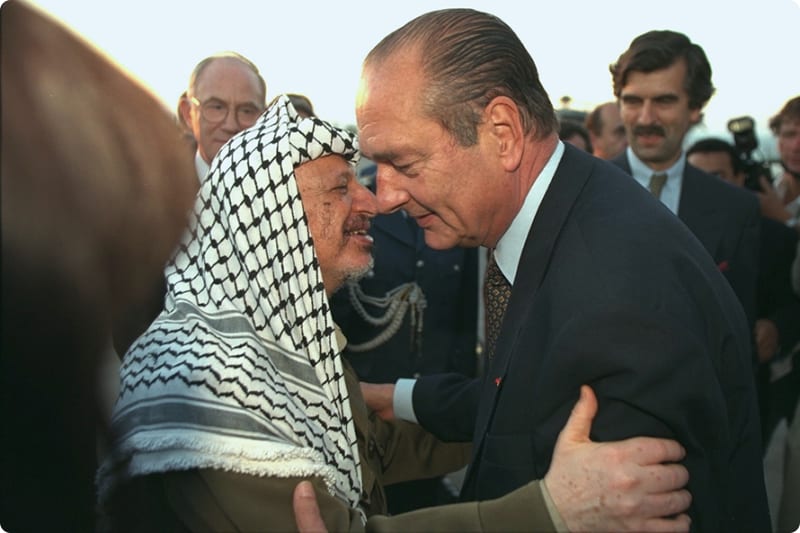
The Algerian Civil War came to a formal end in 2002 and, under President Jacques Chirac’s revised foreign policy, France experienced very few terrorist attacks during his tenure from 1995 until 2007. Chirac’s presidency was characterized by a more amicable foreign attitude towards the Middle East, a harsher stance on terrorism, and a focus on conflict prevention. Following the September 11th terrorist attacks on the United States and the ensuing War on Terror, Jacques Chirac became the leading voice against vast, retributive, military operations, primarily in the case of the Iraq War. This vocalized resistance earned Chirac generous political prestige, especially with Algeria and other parts of the Arab world. In addition, Chirac fostered a mutual diplomatic respect with Yasser Arafat, the former chairman of the PLO and President of the Palestinian National Authority (PNA) from 1994 to 2004; he also made popular criticisms of the 2006 Israeli invasion of Lebanon, which also furthered his standing in the Arab political realm. Later in 2006, Chirac reconfigured France’s nuclear arsenal to tactically counteract terrorism as well as declaring a public threat of a nuclear strike on any state that sponsors a terrorist attack against France. These progressive, hardline policies ushered in another nonviolent period for France that began with the neutralization of the GIA in 1998-1999, and came to an abrupt end with the rapid expansion of ISIL, a radical Islamic terrorist group that began as an Al-Qaeda affiliate during the Iraq War resistance efforts, and the group’s 2014 proclamation of a worldwide caliphate. This proclamation was based on the now preeminent ideology of Al-Qaeda, and initiated radicalization, militarization, and further internationalization of the Muslim world.
The beginning stages of this radicalization struck France on 7 January 2015, when the offices of the satirical newspaper Charlie Hebdo were attacked by Muslim gunmen. Charlie Hebdo had historically printed multiple newspapers featuring images of the prophet Muhammad, whose visual depiction is forbidden in most parts of the Muslim world. The two gunmen had previously pledged allegiance to Al-Qaeda and had received formal jihadist training in the years prior to the attack. Motivated by ISIL-related extremist fervor, the two gunmen killed 12 people and injured 11 more in the shooting. The attack was the deadliest in France since the OAS Paris-Strasbourg train bombing over 50 years prior, and ultimately marked the beginning of an Islamic reign of terror that left 249 dead in France between 2015 and 2018 (Fondapol).
The Charlie Hebdo attack remained as the deadliest terrorist attack on French soil for only 10 months before being surpassed by the November 2015 Paris Attacks. The terrorist attacks on Paris were a coordinated series of 6 individual attacks over the course of 4 hours during the night of November 13th-14th. Nine perpetrators engaged in three separate explosive attacks and six mass shootings, which took the lives of 130 people and injured 416. On 14 November, ISIL took responsibility and claimed the attack was retaliation for previous French airstrikes on ISIL targets in Syria, as well as being an objection to then-President François Hollande’s Middle Eastern foreign policy, and an overall ideological objection to Western values.

Nine months later, on 14 July 2016, a French-Tunisian terrorist drove a truck through a crowd of people celebrating Bastille Day in Nice, France, in an attack that killed 86 people and injured 434. It was soon discovered that the terrorist had only recently been radicalized, and ISIL claimed responsibility by saying that he had answered their calls for citizen action. While ISIL has lost almost all territory and influence since 2016, these three Islamic terrorist attacks demonstrate the present transformation of radical Islam’s threat to France. The political and religious ideology of ISIL is not unfamiliar to France; however, ISIL added a communicative overhaul to these beliefs by mass-recruiting global militants directly into their insurgency through the use of modern digital technology and forceful propaganda campaigns. Additionally, ISIL utilized a scattered underground network of sleeper cells to conduct international terrorist attacks without raising prior alarms.
Since the mid 20th century, terrorist attacks and radical ideologies have been one of the leading security threats facing France due to the nation’s questionable foreign policy and their position in Western politics. The Algerian War produced the first extremist groups in the form of far-right domestic nationalist groups that used terrorism in attempts to deter Algerian independence. In the 1970s, the domestic terrorist threat devolved into various indigenous separatist movements that attempted to gain independence for specific regions of France. The 1970s also saw the inception of Islamic terrorism in France due to Arab-Israeli political conflicts. In the following years, the domestic terrorist threat became insignificant, and was overshadowed by the evolution of radical Islamic terrorism from a simple political device into a global cooperative of fanatic jihadists.
Works Cited
- Ernaux, Annie. Les Années. Gallimard, 2008.
- Fanon, Frantz. Pour La révolution Africaine: Écrits Politiques. Découverte, 2006.
- “Islamist Terrorist Attacks in the World 1979-2021.” Fondapol, 17 Nov. 2021, https://www.fondapol.org/en/study/islamist-terrorist-attacks-in-the-world-1979-2021/.
- Jeremy Shapiro & Bénédicte Suzan (2003) The French Experience of Counter-terrorism, Survival, 45:1, 67-98, DOI: 10.1093/survival/45.1.67
- Shaun Gregory (2003) France and the war on terrorism, Terrorism and Political Violence, 15:1, 124-147, DOI: 10.1080/09546550312331292987