Medici Palace
Fall 2022
The Palazzo Medici Riccardi, a resplendent architectural masterpiece in the heart of Renaissance Florence, stands as a testament to the power, influence, and artistic patronage of the Medici dynasty. Commissioned by Cosimo de' Medici in the early 1440s (Cherubini & Fanelli, 1990), the palace embodies the profound cultural, social, and political changes that swept through the Italian city-states during this transformative period. The construction of the palazzo not only signified the Medici's triumph over rival factions and their consolidation of power within Florence, but also exemplified the humanist ideals and classical revival that define the Renaissance era.

Cosimo's bold approach in acquiring neighboring properties and razing them to construct an entirely new edifice set the stage for the palazzo to become the epitome of magnificenza, a concept which encouraged Florentine elites to contribute to the public good through the enhancement of private properties. This tied the Medici Palace to broader economic and civic developments in the city. The notion of magnificenza is intertwined with the concept of patronage, a driving force behind the Renaissance's transformative impact on the arts. Cosimo, the quintessential humanist patron, worked closely with the architect Michelozzo to create a residence modeled on the ancient Roman domus. The palazzo incorporated numerous classical elements, from the Corinthian colonettes adorning the windows to the grand classical cornice with its dentils and egg-and-dart motifs. The building's tripartite façade, featuring a combination of rustication and ashlar masonry, embodied Renaissance values of rationality, order, and a revival of antiquity (Cherubini & Fanelli, 1990).
Michelozzo's robust interpretation of Renaissance architectural principles, heavily influenced by his teacher Brunelleschi and classical Roman forms, is evident throughout the palazzo. The building exhibits a strong sense of symmetry, proportion, and innovative use of rustication that distinguishes its monumental façade. Comparisons can be drawn to Brunelleschi's earlier works like the Ospedale degli Innocenti, which also feature regularity and harmony in their design. However, Michelozzo's palazzo is noted for its more fortified appearance, likely reflecting the Medici's desire for a structure symbolizing strength and stability amid the complex political landscape of 15th-century Florence (Gargiani, 2003).

The palazzo's design also clearly referenced the Palazzo Vecchio, the seat of Florentine government, particularly in its use of heavy stone walls and absence of ground-floor shop openings. This connection underscores the Medici's political ambitions and desire to position themselves as de facto leaders of the city-state (Kent, 1978). At the same time, the Medici Palace introduced greater regularity and geometrical order compared to the Palazzo Vecchio, setting a new standard for private residences and marking an important step in the development of the Renaissance palace type. The interior of the Medici Palace is equally impressive, abounding with classical elements and precious works of art that attest to Cosimo's discerning patronage. The courtyard, with its Corinthian columns and grand staircase, represents a significant advancement in key architectural features that would come to define Renaissance palaces (Cherubini & Fanelli, 1990). Benozzo Gozzoli's fresco cycle in the Chapel of the Magi, filled with allusions to the Medici's central role in Florentine society, reflects the humanist ideals of the era and suggests divine sanction of the family's elevated status - a message reinforced by the rare privilege of a private chapel within the palace walls.
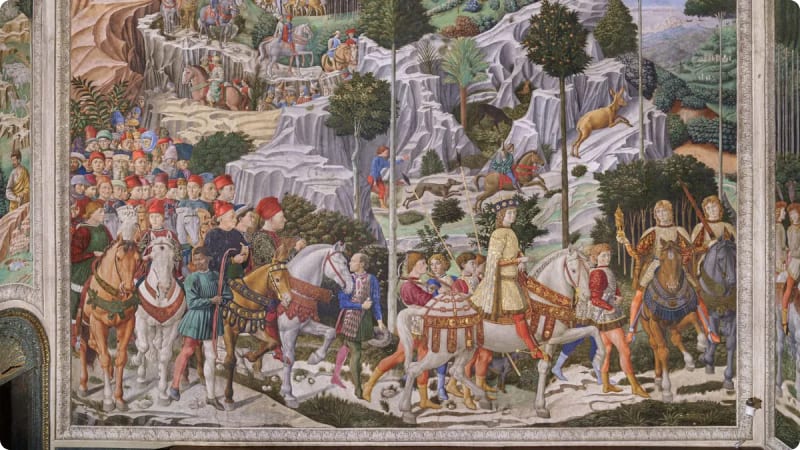
Comparisons can be drawn between the Medici Palace chapel and the nearby Florence Cathedral, which similarly incorporates humanist themes and references to antiquity in Brunelleschi's groundbreaking dome design inspired by the Pantheon. The spiritual artwork adorning both the cathedral and palace chapel interiors further connects these two monuments. Moreover, the palace courtyard bears striking resemblance to those found in Brunelleschi's architectural works, unsurprising given Michelozzo's time as his student and the latter's initial designs submitted for the Medici residence. Beyond its artistic and architectural significance, the construction of the Medici Palace represented a strategic assertion of the family's dominance over rival clans like the Strozzi and Albizzi (Tognetti, 1999). Situated imposingly in the heart of Florence, the palazzo served as a physical manifestation of Medici wealth and power, eliciting both awe and envy from the public as it established new standards of scale and opulence for private residences. Economically, the project provided a boost to local industry by employing numerous skilled artisans and showcasing masterful craftsmanship in its handling of local materials and classical motifs.
The enduring influence of the Medici Palace is evident in its role as a prototype for subsequent Renaissance palaces across Italy and beyond (Folin, 2010). Its innovative synthesis of classical elements and distinctly Florentine style spread through the works of architects like Sangallo and others who emulated the Medici aesthetic. The palazzo's blend of fortified solidity and refined ornamentation would echo through the centuries, shaping the development of the modern European palace and standing as an icon of the creative ferment that defined the Florentine Renaissance (Cherubini & Fanelli, 1990).
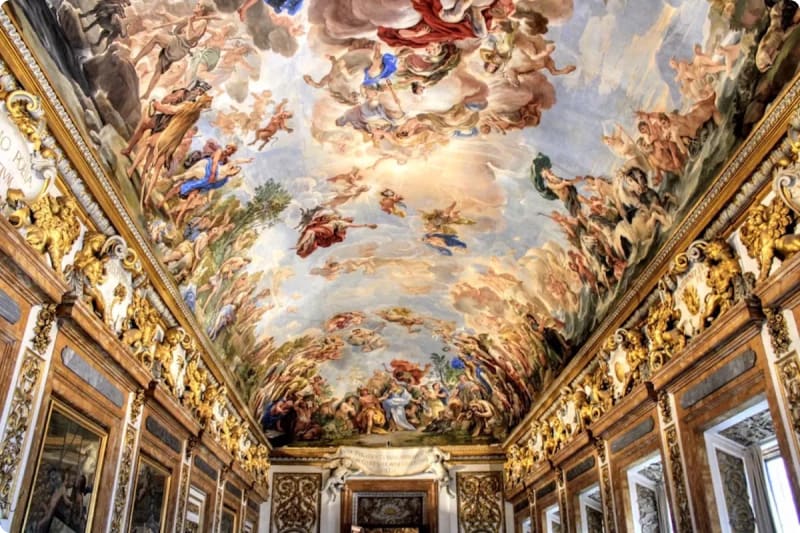
In sum, the Palazzo Medici Riccardi encapsulates the architectural innovations, humanist ideals, and transformative power of patronage in quattrocento Florence. Through Cosimo de' Medici's vision and Michelozzo's masterful design, the palace established new standards for residential architecture and became an enduring symbol of the family's cultural sophistication and political clout. Its complex layering of local tradition, classical revival, and creative innovation illuminates the dynamic forces that shaped one of the most remarkable buildings of the Renaissance era. As a monument to the ambitions and aesthetics of its time, the Medici Palace continues to captivate scholars and admirers as a testament to the ingenuity and splendor of the Florentine Renaissance.
Works Cited
- Ingersoll, Richard. World Architecture: A Cross-Cultural History. Oxford University Press, 2020.
- Cherubini, G., & Fanelli, G. (Eds.). (1990). Palazzo Medici Riccardi di Firenze. Florence: Giunti.
- Ferretti, E. (2016). The Medici Palace, Cosimo the Elder, and Michelozzo: A Historiographical Survey. In S. Beltramo, F. Cantatore, & M. Folin (Eds.), A Renaissance Architecture of Power: Princely Palaces in the Italian Quattrocento (pp. 263-289). Leiden: Brill. Filarete, A. (1972). Trattato di architettura (A. M. Finoli & L. Grassi, Eds.). Milan: Il Polifilo.
- Folin, M. (2010). La dimora del Principe. In D. Calabi & E. Svalduz (Eds.), Il Rinascimento italiano e l'Europa: luoghi, spazi, architettura (pp. 345-365). Vicenza: Angelo Colla.
- Gargiani, R. (2003). Princìpi e costruzione nell'architettura italiana del Quattrocento. Rome: Laterza. Kent, F. W. (1978). The Rise of the Medici: Faction in Florence 1426-1434. Oxford: Oxford University Press.
- Tognetti, S. (1999). Affari e mercati di una compagnia mercantile-bancaria nella Firenze del XV secolo. Florence: Olschki.
- Vasari, G. Le vite de' più eccellenti pittori, scultori e architettori.