Museums of Atlanta
Fall 2022
The Michael C. Carlos Museum
The transformation of the Michael C. Carlos Museum at Emory University in Atlanta, Georgia, stands as a compelling case study in the evolution of postmodern architecture. Under the guidance of renowned architect Michael Graves, the museum underwent a dramatic renovation and expansion in the early 1980s, embodying many of the key principles and aesthetics of the postmodern movement(Emory Historian, 2019).
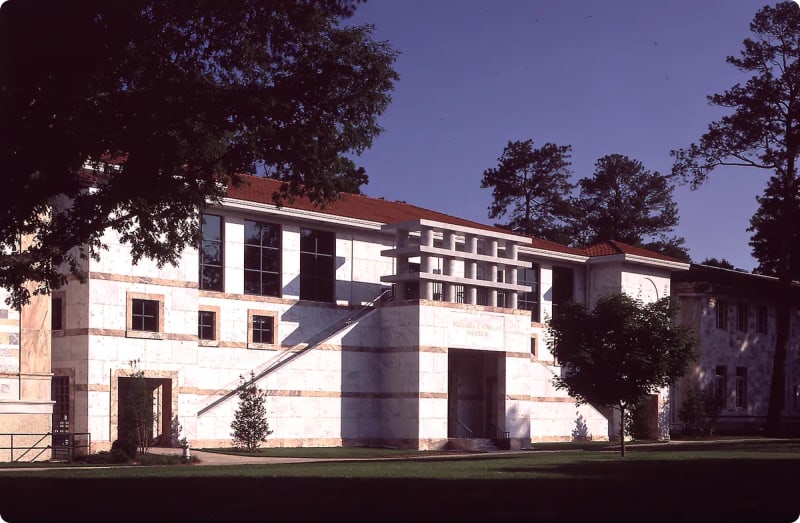
Graves, a leading figure in postmodern architecture, was known for his bold, eclectic style that often incorporated historical references, vivid colors, and playful ornamentation. His design for the Carlos Museum exemplifies these characteristics, marking a significant departure from the austerity and functionalism of modernist architecture that had dominated the mid-20th century.
The museum's original home, the former Emory Law School building, was a modest structure that had served as a repository for the university's growing art collection since 1972. With the generous support of Atlanta businessman Michael Carlos, Emory embarked on an ambitious project to transform the building into a world-class museum facility. Graves' design, completed in 1985, not only expanded the museum's square footage but also imbued it with a distinct architectural identity rooted in postmodern principles(Emory Historian, 2019).
One of the most striking features of Graves' design is the museum's facade, which combines classical elements with whimsical, postmodern flourishes. The entrance is marked by a grand, pyramidal pediment supported by columns, a clear nod to ancient Greek and Roman architecture. However, Graves subverts these classical references by painting the columns in bright, contrasting colors and adorning the pediment with abstract, geometric patterns. This juxtaposition of historical forms and contemporary, playful details is a hallmark of postmodern architecture, which sought to break free from the strict, monochromatic aesthetics of modernism.

Inside the museum, Graves' design creates a series of intimate, carefully crafted spaces that showcase the museum's diverse collections. The galleries are arranged around a central atrium, which serves as a focal point and gathering space for visitors. The atrium is illuminated by a large, skylit roof, a feature that recalls the grand, light-filled spaces of classical museums while also introducing a modern, industrial element through the use of steel and glass.
Throughout the museum, Graves employs a rich palette of colors, textures, and materials to create a sense of warmth and visual interest. The walls are painted in deep, saturated hues, ranging from terracotta red to cobalt blue, which serve as a vibrant backdrop for the artwork on display. Graves also incorporates a variety of decorative elements, such as patterned floor tiles, ornamental moldings, and custom-designed furniture, which add layers of detail and complexity to the spaces.
Beyond its aesthetic qualities, the Carlos Museum's postmodern design also reflects a broader shift in the role and purpose of museums in the late 20th century. Postmodern architects sought to create museum spaces that were more accessible, engaging, and responsive to the needs of diverse audiences. Graves' design for the Carlos Museum embodies this ethos, creating a welcoming, immersive environment that encourages visitors to explore and interact with the collections in new and meaningful ways.
The Carlos Museum's transformation under Michael Graves' postmodern vision also speaks to the broader cultural and intellectual currents of the 1980s. Postmodernism emerged as a reaction against the perceived shortcomings of modernism, which was seen by many as cold, alienating, and disconnected from history and tradition. By embracing a more eclectic, historically-informed approach, postmodern architects like Graves sought to re-engage with the past and create buildings that were more responsive to human needs and desires.

In this sense, the Carlos Museum can be seen as a microcosm of the postmodern movement in architecture, embodying its key principles, aesthetics, and aspirations. The museum's design not only transformed a modest university building into a world-class cultural institution, but also helped to redefine the role of museums in contemporary society.
The influence of the Carlos Museum's postmodern design can be seen in the work of subsequent museum architects, who have continued to explore the possibilities of creating engaging, immersive spaces that blend historical references with contemporary forms and materials. From Frank Gehry's titanium-clad Guggenheim Museum in Bilbao, Spain, to Herzog & de Meuron's Tate Modern in London, the legacy of postmodern museum architecture continues to shape the way we experience and interact with art and culture.
The Michael C. Carlos Museum at Emory University stands as a seminal example of postmodern architecture, embodying the movement's key principles of eclecticism, historical reference, and human-centered design. Under Michael Graves' visionary guidance, the museum's transformation revitalized a modest building while redefining the role and purpose of museums in the late 20th century. As the influence of postmodernism began to reshape the cultural landscape, another architectural luminary, Richard Meier, was poised to leave his mark on Atlanta with a strikingly different approach to museum design.
The High Museum of Art (Main Building)
As the post-modernist experiential shift in museum design took hold, Richard Meier's High Museum of Art in Atlanta emerged as an influential counterpoint. Meier's 1983 design stands as a masterpiece of Late Modernism, celebrated for its striking sculptural form and innovative use of materials. The building's gleaming white facade, composed of glazed porcelain steel panels, creates a sharp contrast against the surrounding cityscape, asserting the museum's presence as a beacon of art and culture. Meier's distinctive architectural language, characterized by geometric precision, spatial complexity, and a poetic interplay of light and shadow, is on full display in this landmark structure (Meier, 1984).

The heart of Meier's design is a soaring four-story atrium, which serves as the main circulation space and the focal point of the museum's interior. This grand, light-filled volume is defined by a series of ramps that spiral along the building's perimeter, recalling the dynamic spatial configuration of Frank Lloyd Wright's Guggenheim Museum in New York. However, in a departure from Wright's design, Meier's ramps do not double as gallery spaces; instead, they provide a separate circulation system that allows visitors to experience the art on display without interruption (Rykwert, 1984).
The atrium's dramatic skylight, composed of a grid of translucent glass panels, floods the space with diffused natural light, creating a luminous and ethereal atmosphere that has become a hallmark of Meier's architectural style. This abundance of daylight, while visually stunning, has also presented challenges for the museum's curatorial team, requiring careful consideration of artwork placement and light control to ensure the preservation of sensitive materials (Giovannini, 1983).

Meier's design for the High Museum also demonstrates his mastery of spatial organization and his ability to create a coherent and legible architectural narrative. The building's crisp, rectilinear volumes are arranged in a series of interlocking planes, creating a dynamic interplay of solid and void that guides visitors through the museum's various galleries and public spaces. This spatial clarity is reinforced by Meier's limited material palette—primarily white porcelain steel panels, glass, and painted steel—which creates a sense of visual continuity throughout the building (Goldberger, 1983).
While Meier's High Museum has been widely praised for its architectural brilliance, it has also faced criticism for its austerity and perceived lack of contextual sensitivity. Some critics have argued that the building's stark white facade and unyielding geometric forms represent a kind of architectural hubris, prioritizing sculptural expression over the creation of inviting and accessible public spaces (Muschamp, 1983). However, supporters of Meier's design have countered that the building's bold, iconoclastic presence serves as a necessary counterpoint to the surrounding urban fabric, asserting the museum's role as a cultural catalyst and a symbol of Atlanta's progressive aspirations (Frampton, 1983).

Richard Meier's design for the High Museum of Art in Atlanta stands as a seminal work of Late Modernism, celebrated for its sculptural clarity, innovative use of light, and sophisticated spatial organization. As the museum continued to grow and evolve, it would fall to another architectural visionary, Renzo Piano, to build upon Meier's legacy with a sensitive and transformative expansion.
The High Museum of Art (Renzo Piano Addition)
Building upon the groundwork laid by Richard Meier, the High Museum of Art in Atlanta underwent a significant expansion between 1999 and 2005, led by renowned Italian architect Renzo Piano. This project aimed to double the museum's existing surface area while reconfiguring the museum complex to establish a dialogue between the existing buildings, including Meier's iconic structure, and the new additions. Piano's intervention demonstrates his mastery of architectural design, seamlessly fusing his signature High-Tech approach with Meier's emphasis on light as a fundamental element of the visitor experience.
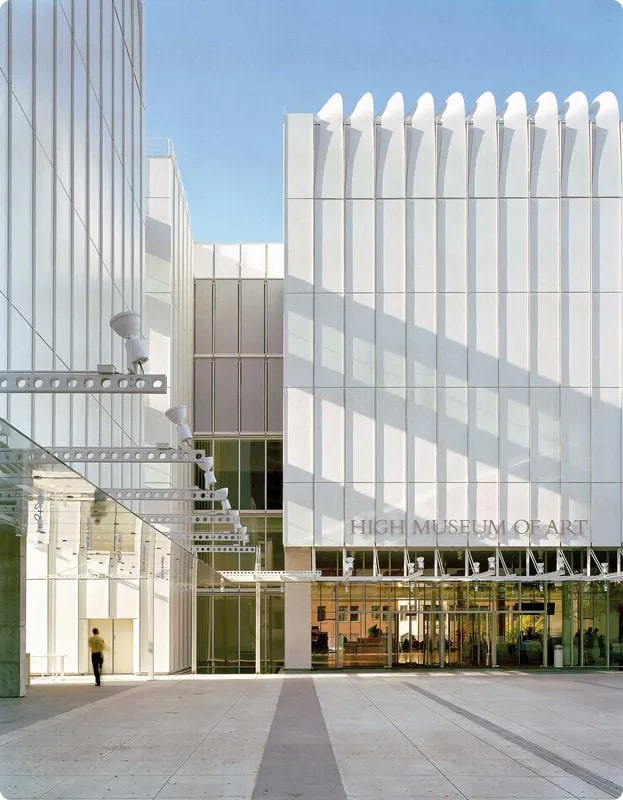
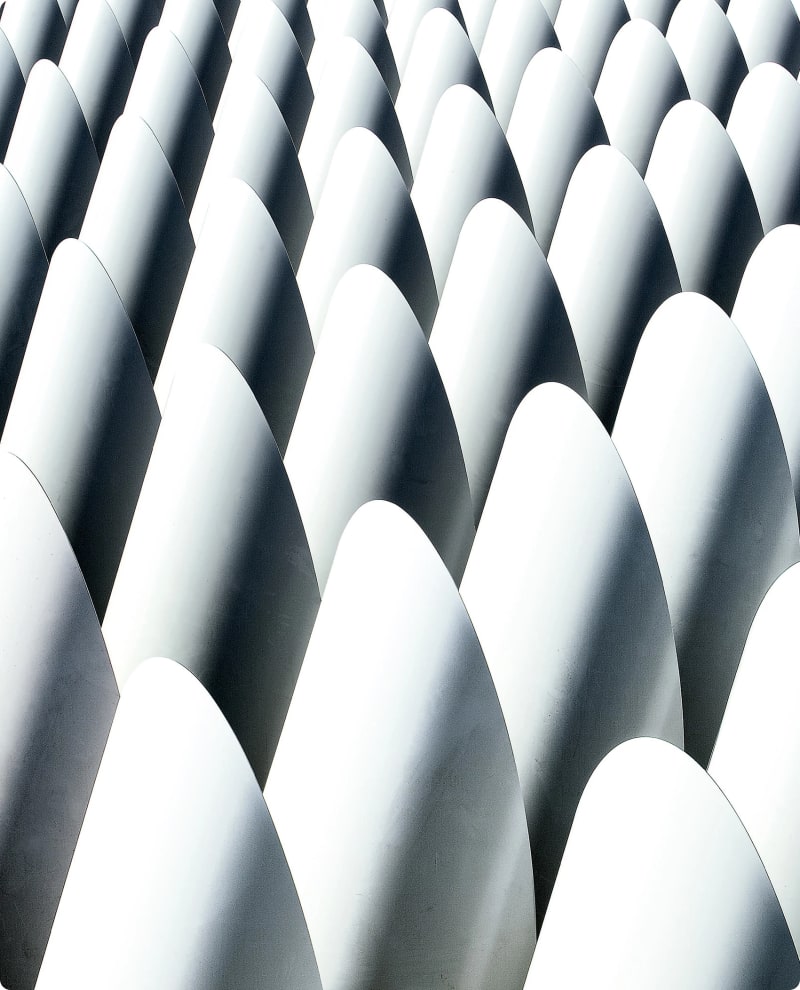
Piano's design for the High Museum expansion is characterized by a series of elegant engineering solutions and innovative construction techniques. The most striking feature of the new additions is the use of molded gypsum pieces as "light scoops" atop the gallery spaces(Fondazione Renzo Piano, n.d.). These sculptural elements introduce an aqueous form to the building's roofline while bathing the artwork in carefully controlled natural light. This technical feat showcases Piano's ability to harness daylight in a manner that enhances the viewing experience without compromising the conservation needs of the artworks on display.
The exterior of the new buildings is clad in aluminum panels, echoing Meier's original vision of a pristine white enamel façade. This material choice not only creates visual continuity within the museum complex but also reflects Piano's keen understanding of the interplay between light and surface. The aluminum panels, with their subtle variations in tone and texture, capture and diffuse the changing qualities of sunlight throughout the day, animating the museum's exterior and creating a dynamic visual experience for visitors approaching the building(Fondazione Renzo Piano, n.d.).

In addition to his technical and aesthetic innovations, Piano's design for the High Museum expansion demonstrates a deep sensitivity to the museum's urban context. The scale of his intervention was carefully calibrated to respond to the surrounding streets, articulating a series of new public spaces that are seamlessly integrated with the museum's architecture. These spaces, which include gardens and passageways, lead visitors toward a central piazza that serves as the heart of the expanded museum complex. This arrangement recalls the social and spatial dynamics of Michelangelo's Piazza del Campidoglio in Rome, underscoring Piano's deep engagement with the history of urban design and his ability to reinterpret classical principles in a contemporary context(Fondazione Renzo Piano, n.d.).
The High Museum expansion also showcases Piano's skill in creating fluid, interconnected spaces that encourage exploration and discovery. The new additions are linked to Meier's original building through a series of glazed bridges and passageways, which not only facilitate circulation between the various parts of the museum but also offer visitors enticing glimpses of the artworks and architectural features that lie ahead (Fondazione Renzo Piano, n.d.). This sense of transparency and spatial continuity is further enhanced by the careful placement of windows and skylights, which frame strategic views of the surrounding cityscape and allow natural light to penetrate deep into the building's interior.
Critically, Piano's intervention at the High Museum represents a respectful and nuanced response to Meier's original architectural vision. Rather than seeking to upstage or overshadow the existing building, Piano's additions engage in a thoughtful dialogue with Meier's design, complementing its geometric rigor and material palette while introducing new spatial and experiential qualities. This approach demonstrates Piano's deep understanding of the role of architecture in shaping the visitor experience, as well as his ability to work sensitively within the context of an existing architectural masterpiece.

In conclusion, the Renzo Piano-designed expansion of the High Museum of Art in Atlanta stands as a testament to the architect's technical prowess, aesthetic sensitivity, and deep engagement with the social and urban dimensions of museum architecture. Through his innovative use of materials, his masterful control of light, and his creation of fluid, interconnected spaces, Piano has crafted an addition that both honors and enhances the legacy of Richard Meier's iconic building. In doing so, he has not only expanded the physical footprint of the High Museum but also enriched the cultural landscape of Atlanta, providing a new architectural landmark that will continue to inspire and engage visitors for generations to come.
Works Cited
- Ingersoll, Richard. World Architecture: A Cross-Cultural History. Oxford University Press, 2020.
- Frampton, K. (1983). Richard Meier's High Museum: A Critical Appraisal. Architecture Record, 171(8), 100-107.
- Giovannini, J. (1983). Meier's Geometry of Light. Architecture, 72(8), 42-49.
- Goldberger). Architecture View: The High Museum of Art. The New York Times, July 10, 1983.
- Meier, R. (1984). The High Museum of Art. In Richard Meier, Architect: 1964-1984 (pp. 334-347). New York: Rizzoli.
- Muschamp, H. (1983). An Unsettling Bravura. The New Republic, 189(5), 25-29.
- Rykwert, J. (1984). Museum and Meaning: Richard Meier's High Museum of Art. Domus, 649, 14-21.
- Fondazione Renzo Piano. (n.d.). High Museum of Art Expansion.