Postcolonial Connections
Spring 2022
The historical trends of postcolonial Africa can be effectively analyzed through the lens of Frederick Cooper's ideas of vertical and horizontal connections. The triumph of African horizontal solidarity over the tenets of unequal vertical connections between colonies and ruling powers during decolonization granted the disillusioned African masses a combined political power against the systematic usurpation of the continent. As Cooper emphasizes, this horizontal solidarity, exemplified by Senghor's advocacy for Africans uniting with each other, was seen as "the only way to acquire the political strength to challenge the colonial powers" (Cooper, Africa in the World: Capitalism, Empire, Nation-State).
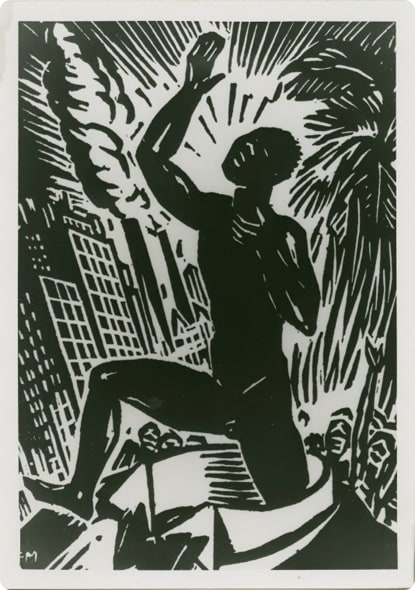
Following independence, the rise of horizontal solidarity initially reaped benefits in newly formed nation-states like Côte d'Ivoire, where strong local bonds cultivated development and relatively humane governance. However, the promotion of a connected and capable African unity would face significant challenges and limitations in the years that followed. Cooper notes that "What made politics in the 1950s so volatile was the coexistence of horizontal and vertical connections" (Cooper), highlighting the intersection and the eventual dominance of vertical connections due to political and economic pressures.
Powerful government officials soon realized that maintaining horizontal connections at the highest political level was less fruitful than preserving economic ties to former colonial powers. This resurgence of vertical connections saw the return of "a notion advocated by some French colonial interests in the 1930s of focusing on a 'useful Africa'" (Cooper). Moreover, the shift to independent nation-states presented challenges to horizontal solidarity, as Cooper reflects that "Within the independent nation-state, it became possible for each leader to dismantle citizenship structures that checked his exercise of vertical authority" (Cooper), reinforcing vertical connections that favored authoritarian governance.
Neocolonial practices further strengthened vertical connections, with international entities and former colonial powers continuing to exert influence over African governance and economics. Cooper illustrates this manipulation through the example of Jacques Foccart, the French president's 'monsieur Afrique,' who "was able to construct his network of patron-client relations with African leaders" (Cooper), limiting the potential of horizontal solidarity.
In conclusion, while the replacement of vertical connections with horizontal solidarity provided an impassioned push for independence during decolonization, it ultimately failed to rise above a limited interpersonal stage and effectively resist new forms of colonialism and betrayals by self-interested government officials. The inevitable dominance of vertical connections, driven by political and economic pressures, overshadowed the initial triumph of horizontal solidarity in postcolonial Africa. Cooper's analysis reveals that the historical trends of postcolonial Africa were shaped by the struggle between horizontal and vertical connections, with the latter ultimately prevailing due to the influence of neocolonialism and the challenges posed by the formation of independent nation-states.
Works Cited
- Cooper, Frederick. Africa in the World: Capitalism, Empire, Nation-State. Harvard University Press, 2014.
- Cooper, Frederick. Citizenship between Empire and Nation: Remaking France and French Africa, 1945–1960. Princeton University Press, 2014.