Le Château de Chambord
Fall 2022
The Château de Chambord, an iconic embodiment of the French Renaissance, stands as a monumental testament to the rivalry, aspirations, and cultural exchange that characterized 16th century Europe. Situated amidst the forests of France's Loire Valley, Chambord's construction began in 1519 under the orders of King François I, originally envisioned as a mere hunting lodge. However, the château's lofty ambitions were soon derailed by the Italian War of 1521-1526, a conflict that metaphorically mirrored the structure's larger, egomaniacal purpose - reflecting the intense competition for cultural supremacy between François I and the Holy Roman Emperor Charles V.
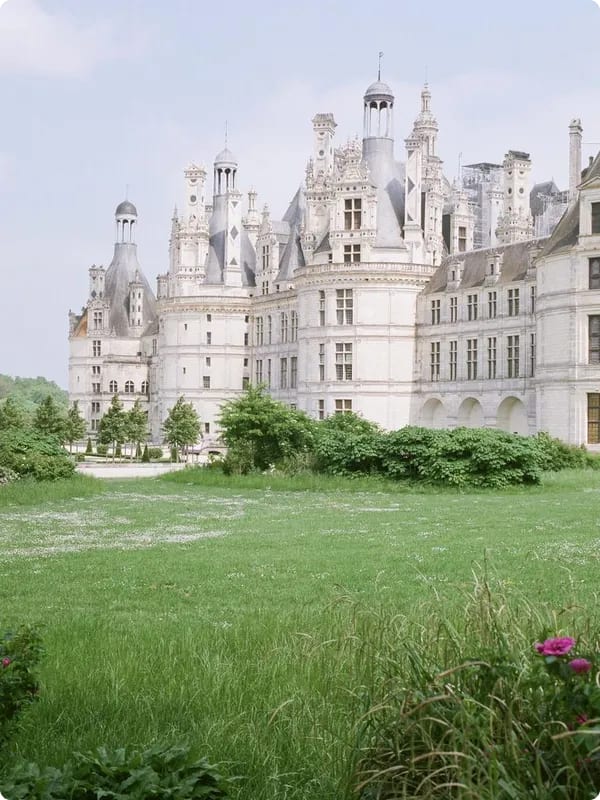
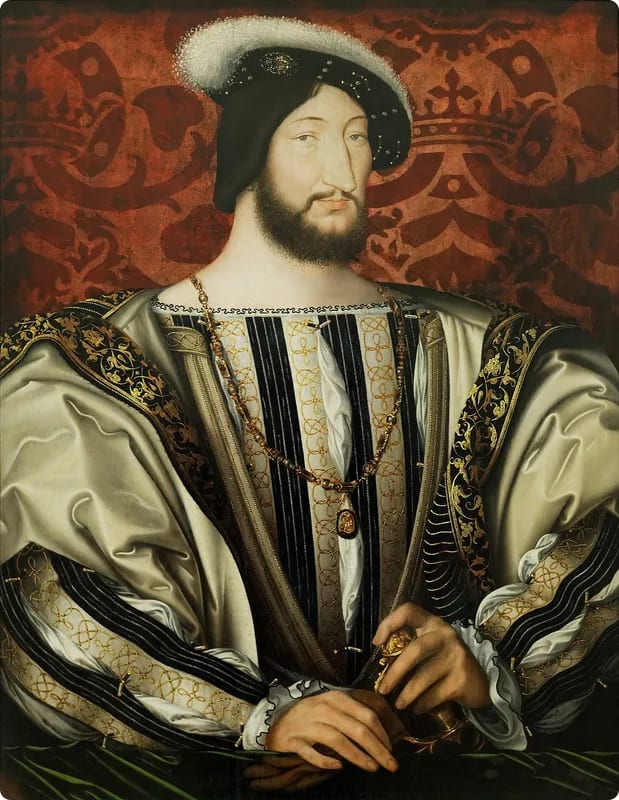
Captivated by the wonders of Italian Renaissance architecture discovered after his victory at the Battle of Marignano in 1515, François I sought to import this flourishing style to France, engaging in an aesthetic arms race with his rival Charles V. This rivalry extended far beyond military engagements, as the two monarchs vied to establish their courts as the true heirs to the classical tradition. François I's invitation to Leonardo da Vinci to join the French court as "Premier Painter, Architect and Engineer of the King" in 1516 underscores this ambition. While most art historians do not recognize da Vinci as Chambord's sole architect, his influence can be seen in various architectural choices, from the central keep's plan to the iconic double helix staircase.
The scale and innovative design of Chambord stand as evidence of François I's determination to surpass his rival. Envisioned as an immortalizing monument embodying the values of humanism and ingenuity, the château's construction was a colossal undertaking, involving up to 1,800 workers at its peak and vast quantities of materials sourced from across France. The harmonious blend of Italian Renaissance influences and distinctly French architectural elements resulted in a structure that corresponded to idealized notions of a Renaissance palace, fueled by the popularity of chivalric romance novels like Amadís of Gaul.
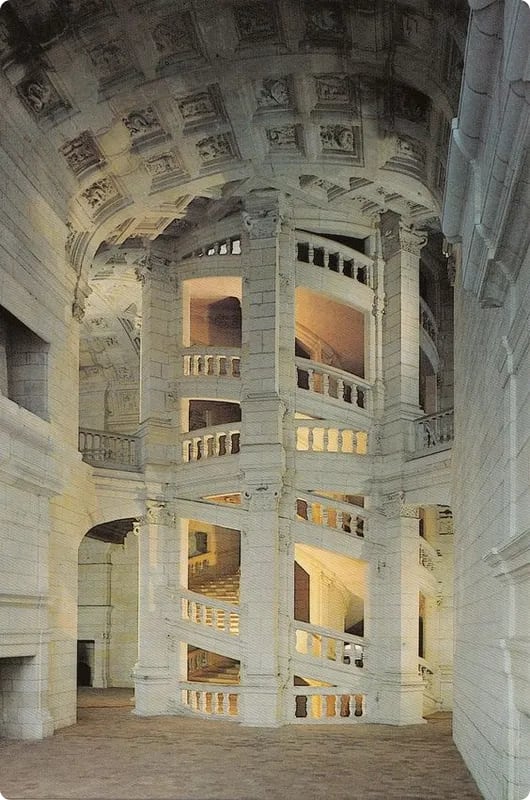
Central to Chambord's design is the innovative double helix staircase, attributed by some to the influence of Leonardo da Vinci. Rising from the ground floor to the terraces, this ingenious element allows two people to ascend and descend simultaneously without crossing paths, serving as a central organizing feature demonstrating a masterful fusion of aesthetic grandeur and practicality. The staircase's place as the "spinal column" around which the château's interior revolves marks a significant departure from the norm, reflecting the spirit of Renaissance innovation.
Despite François I's lofty hopes, Chambord remained largely unfinished and unfurnished during his lifetime. The king's untimely death in 1547 left the château sitting largely abandoned until the 17th century when it received renewed attention under subsequent French kings. Nevertheless, Chambord's cultural significance only intensified, mirroring contemporary architectural developments like the rebuilding of St. Peter's Basilica in Rome. Just as the new basilica symbolized the Catholic Church's transition from traditional roots to a more extravagant expression of papal authority, Chambord represented the French monarchy's embrace of Italian Renaissance design as a means of asserting its own cultural hegemony.
The château's interior gyratory symmetry, with its double helix staircase and cross-shaped layout, serves as definitive proof of France's adoption and promotion of designs once considered unique to Italian Renaissance architecture. Thus, Chambord can be seen as a Potemkin Village of the French Renaissance – a grand facade aiming to prove French dominance through foreign styles and techniques. Despite its initial lack of use, the château's enduring legacy lies in its embodiment of the complex web of political rivalries, cultural ambitions, and artistic influences that shaped this pivotal period.
In the centuries that followed, Chambord underwent numerous transformations and challenges. The 18th century saw improvements to its interiors, accommodating illustrious residents such as Stanislaw Leszczynski, the exiled King of Poland, and Marshal de Saxe. During the French Revolution, the château was pillaged, its furniture sold off, but the monument itself escaped destruction. The 19th century marked Chambord's transition to private ownership, first gifted to Marshal Berthier by Napoleon, then offered to Henri d'Artois, Duke of Bordeaux, grandson of King Charles X. Under the stewardship of the Count of Chambord (Henri d'Artois) and later the Princes of Bourbon-Parma, the estate underwent restoration efforts and opened its doors to visitors.
The 20th century brought new challenges and unexpected roles for Chambord. During World War II, the château served as a shelter for thousands of priceless works of art from French museums, becoming the largest of 83 repositories safeguarding national treasures against Nazi destruction and looting. Iconic pieces such as the Mona Lisa and the Lady and the Unicorn tapestries found refuge within Chambord's walls, transforming it into an imaginary museum and cementing its place in the annals of French cultural heritage.
Chambord's post-war years saw its transition to state ownership in 1930 and its designation as a national hunting and wildlife reserve in 1947. The château's historical and artistic significance garnered international recognition with its inscription on the UNESCO World Heritage List in 1981. In the early 21st century, Chambord embarked on ambitious projects to enhance its visitor experience and restore its architectural splendor, including the recreation of its formal gardens in 2017 and the ongoing restoration of its iconic roof lanterns.

As Chambord looks to the future, it continues to embody the spirit of innovation and cultural exchange that characterized its inception. Through contemporary art exhibitions, artist residencies, and a dynamic cultural program, the Domaine National de Chambord seeks to engage visitors in a dialogue between the past and present, offering new perspectives on this architectural marvel and its surrounding landscape. Educational initiatives and digital innovations further extend Chambord's reach, ensuring that its legacy remains accessible to a global audience.
In conclusion, the Château de Chambord stands as an enduring symbol of the French Renaissance, encapsulating the complex interplay of political ambition, artistic inspiration, and cultural rivalry that defined the era. Its architectural grandeur, innovative design, and rich history have secured its place as a national treasure and a testament to human ingenuity. As Chambord continues to inspire and captivate visitors from around the world, it remains a vital link between the past and present, inviting us to reflect on the enduring power of art, architecture, and the human spirit.
Works Cited
- Ingersoll, Richard. World Architecture: A Cross-Cultural History. Oxford University Press, 2020.
- Château de Chambord. (2023). Chambord: A Renaissance Masterpiece. Domaine National de Chambord.