Colonial Ideologies
Spring 2022
Colonialism is the diplomatic practice in which a more powerful state exerts military force over a smaller entity as a means to increase political authority and wealth, and the practice has been a constant aspect of global foreign policy since the creation of the first historic empires. Beginning with the invasion of Algiers in 1830, France utilized a policy of colonialism in their construction of their second overseas empire, which concentrated chiefly on Africa, Indochina, and the Pacific. As their foreign possessions developed and European politics transformed in the late 19th century, the new French empire was quick to convert to modern and more exploitative colonial practices during the age of “New Imperialism”. This period of European colonization was marked by the “Scramble for Africa”, which introduced and propagated a colonial system of usurpation and racial oppression that would become the catalyst for radical transformation in political, economic, and social thought within both French Africa, and the continent as a whole.
The Scramble for Africa was relatively short lived and lasted from the late 19th century until the end of World War II, and the political systems formed during this period were characterized by oppressive authoritarianism and destruction of long standing African traditions. French-Tunisian writer Albert Memmi explains in his 1956 book, Portrait du colonisé, précédé par Portrait du colonisateur, that a colonizer “has succeeded not merely in creating a place for himself but also in taking away that of the inhabitant, granting himself astounding privileges, to the detriment of those rightfully entitled to them. And this not by virtue of local laws, which in a certain way legitimize this inequality by tradition, but by upsetting the established rules and substituting his own” (Memmi 34). Memmi displays the massive shift in the balance of privilege that the Scramble brought, and how colonial governments enabled this injustice through the replacement of existing precedent with their own arbitrary legal codes as a form of de facto discrimination. These novel legal systems also utilized inhumane violence to maintain order and to insure efficiency and stability for the white settlers. In French Africa, a constantly fluctuating and arbitrary legal system known as “indigénat” stripped colonial subjects of property ownership rights, rights to travel, and the right to vote. Additionally, many French colonies were dubbed “military territories”, and order was kept through constant threat of violence over the African subjects. Colonial administrations across Africa, including France, also implemented forced urbanization and detribalization policies that deteriorated social connections between the colonized in order to minimize communal power. The brutality and prejudiced legal code of modern colonialism ensured lucrative French positions with minimal resistance, at the expense of the dehumanization of colonial subjects and the eradication of an African identity.

Albert Memmi further shows the exploitative nature of the colonizer as he writes “If his living standards are high, it is because those of the colonized are low; if he can benefit from plentiful and undemanding labor and servants, it is because the colonized can be exploited at will and are not protected by the laws of the colony.” (Memmi 33) He touches again on the discriminatory colonial legal codes, but also acknowledges the primary economic factor that contributed to colonial opression. Within African colonies, European officials and industrialists prospered and enjoyed extreme luxuries through the use of “plentiful and undemanding labor and servants.” This was a consistent trend in French Africa as, under the same legal system of indigénat, the native population in French colonies were seen as a source for cheap wage labor, and a system was formed where Africans worked to siphon resources from their homeland while never seeing the end benefit of their labor. In addition, since these colonies were created with the primary intent to extract resources, the colonial government had no incentive to invest in institutions or infrastructure that was not used in the harvest or transport of raw goods. The overall extraction of wealth from Africa without any return on the profits led to a universally disparaged continent that was left underdeveloped despite the presence of booming industry.
The political and economic exploitation of Africa was justified by French public opinion that colonialism was a morally righteous method of “civilizing” Africans, and any form of African resistance was merely a depraved mutation of tribalism that was acting irrationally against this “civilizing mission.” Albert Memmi writes “It is significant that racism is part of colonialism through-out the world; and it is no coincidence. Racism sums up and symbolizes the fundamental relation which unites colonialist and colonized” (Memmi 89). This fundamental relationship allowed the discrimination and manipulation of a native population to go relatively unchallenged, and pushed the metropoles to find further racial evidence to mantain public support. Many European powers performed racist pseudoscientific studies, such as phrenology or crainology, and flaunted the “findings''. Such studies aimed to prove that the African biological structure resembled an ape, and thus differentiated the colonized subject from what was considered genetically and evolutionally superior. While France was not known for a strong involvement in scientific racism, racial prejudice against African colonial populations was extremely common in both the colony and the metropole. This extreme racial prejudice and ensuing senseless scientific justification for inhumane actions under colonialism left a lasting impact on global race relations, and further dehumanized the colonized population.
These political, economic, and social factors under New Imperialism embodied the French efforts for the strategic positioning and extreme wealth granted by an overseas empire, however this cruel imperial reign was given multiple debilitating blows during the early and mid 20th century. The end of World War I (1914-1918) and its unforeseen horrors left a sense of disillusionment amongst the French masses over the righteousness of their government’s general actions. The “winds of change” progressed further due to contemporary civil rights movements in the U.S., such as W.E.B. DuBois and the Niagara Movement, and with the outbreak of World War 2 (1939-1945), where African colonial subjects volunteered or were conscripted into the French national military. The war brought African soldiers to international theaters of battle, and they witnessed how other colonial possessions, such as British Burma, had already fostered a nationalist movement that had begun their fights towards liberation. African natives who had already disavowed their colonial position due to a consumption of progressive American racial thought, were even further radicalized by either their personal service in World War II, or through the stories of veterans. This led to a deeper African political awareness, an expectation of self-determination, and the inception of nationalist movements throughout Africa.
President of an independent Senegal and political theoretician Léopold Senghor was one such soldier in the French Colonial Army, and in his 1940 series of poems Que m’accompagnent Koras et Balafong, he writes “Comme l’appel du Jugement, trompette éclatante sur les charniers neigeux d’Europe. J’ai choisi mon people noir peinant, mon peuple paysan, toute la race paysanne par le monde. “Et tes frères se sont irrités contre toi, ils t’ont mis à bêcher la terre'' (Senghor 44). In this verse, he uses the graves of soldiers who died in Europe during the War as inspiration to formulate a call of judgment against European powers for their injustices in Africa, as well a call to action for “toute la race paysanne par le monde” to rise up and claim the independence and respect that they rightfully deserve after decades of deprecation.
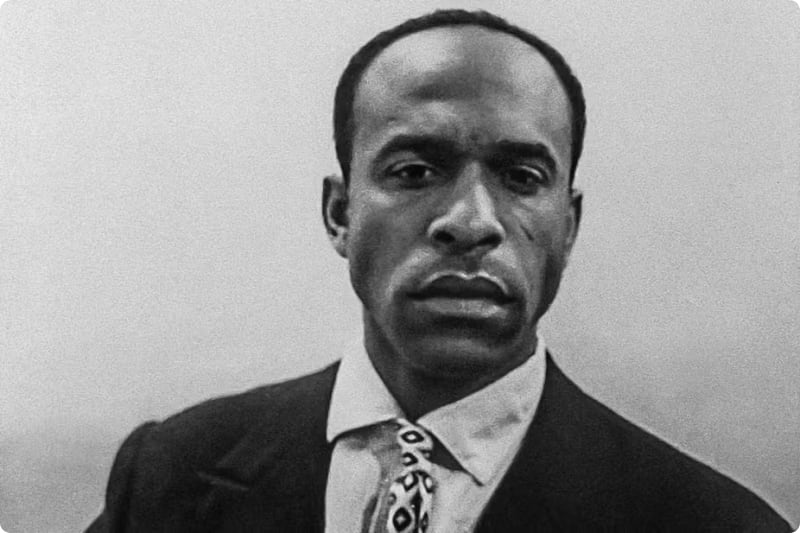
Furthermore, Senghor becomes invigorated by images of his native Senegal’s natural beauty and mystique, and he writes “O ma Lionne ma Beauté noire, ma nuit noire ma Nuite noire ma Noire ma Nue! Ah! Que de fois as-tu fait battre mon cœur comme le léopard indompté dans sa cage étroite… Nuit qui fonds toutes mes contradictions, toutes contradictions dans l'unité première de ta négritude." (Senghor 52) In this verse, Senghor not only alludes to his growing impatience and passionate need for radical political change against the French colonial government, but he directly references the integral idea of Nègritude. Nègritude was a literary movement cofounded by Senghor in the 1930s which grew from the ideas of the contemporary Harlem Renaissance in the U.S. and the radical fervor espoused by Russian revolutionaries in the 1910s. The movement gathered intellectuals and political writers from global French colonies, and they produced literature in response to their disgust at the shared experience of the French colonial subject. The writers propagated radical views and ideas involving the acceptance of a black consciousness, a rejection of a black inferiority complex, a sense of black unity, and a return to embracing black cultural identities. While this movement remained in a strictly literary and intellectual setting, the beliefs gave confidence to other revolutionaries and served as one of the preeminent ideological foundations for African nationalist movements in the period of decolonization.
Following the end of World War II in 1945, the return of soldiers to their colonial homes rapidly turned decolonization into perceived moral necessity across Africa, and political groups formed around the idea of national independence. The first wave of liberating passion specifically targeted France as the Indochina War began almost immediately in 1946, and witnessing the independence efforts of another French colony greatly influenced the pace of decolonization in French Africa. This overall sentiment spread to other African colonies, and European liberal groups attempted to advocate for concessions of a twofold citizenship in a bid to conserve their colonial prowess. It’s with this Western acknowledgement of representative equality that Martiniquais political philosopher Frantz Fanon evaluates, in his 1961 book Les Damnés de la Terre, that “thus the native discovers that his life, his breath, his beating heart are the same as those of the settler. He finds out that the settler's skin is not of any more value than a native's skin; and it must be said that this discovery shakes the world in a very necessary manner” (Fanon 48). Fanon exhibits the shared awakening of an African sense of unity and consciousness, and a newly defiant African attitude towards the colonial processes that had systematically dehumanized them in the decades prior. This radical sense of unity and a regained identity built off the ideals of the Nègritude movement and defined the social objectives of newly forming independence movements during this period. The rise of shared beliefs, coupled with returning veterans’ accounts of national uprisings across Asia, further contributed to the beginning of formal decolonization in the mid 20th century.
In the 1950s, African nationalist movements gained steam and wielded a proper political edge, decolonization was truly inevitable and soon swept across the continent. The process of decolonization was different based on each individual colony and the nature of the individual political tenets driving the liberation movements. The French African colonies saw the most immediate and extreme violence, especially in the Algerian War (1954-1962) which saw an outright barbaric seven year conflict between the French government and the Algerian FLN nationalist party. The war ended with a referendum for Algerian Independence in 1962, and “the Algerian people is today an adult people, responsible and fully conscious of its responsibilities. In short, the Algerians are men of property” (Fanon 192). Nevertheless, bitter sentiments failed to ever properly dissipate, and a resulting increase in terrorism ensued as well as a humanitarian crisis in Algeria as tens of thousands of neutral Algerians fled the country for France to avoid repercussions by the now independent Algerian government. The Algerian War is symbolic of the most violent and hostile extent of decolonization in French colonies, but also shines enormous clarity on the political chaos and social pandemonium that was universal for each national struggle for independence in Africa.

However, once decolonization was achieved, this liberating violence didn't just disappear, in fact, “it has all the less reason for disappearing since the reconstruction of the nation continues within the framework of cutthroat competition between capitalism and socialism” (Fanon 73). The continuation of divisive conflict beyond the necessary violence of decolonization exhibits the wider economic and political question on how these junior nation-states would proceed without the looming imposition of colonial rule. Going forward these colonies were faced with an ideological impasse between resorting to the Western tenets of capitalism that had been the root of their exploitation only years prior, but still provided a sense of familiarity, or embracing the novel but unproven socialist theories that presented an opportunity at the creation of an industrial state that would promote the true will of the people.
Nevertheless, Africa’s grappling with Cold War political dilemmas was proof that former colonies had ascended to a more globally involved ideological level. In May 1968, France experienced a period of civil unrest stirred by student protests and labor movements in opposition to the pervasive social manipulation of American capitalism and consumerism. In the midst of these demonstrations and general strikes, Jean Paul-Sartre sat down for an interview with Daniel Cohn-Bendit, the public face of the student protests. In the interview, Sartre discusses the nature of the protests with Cohn-Bendit as he says, “What many people cannot understand is the fact that you have not tried to work out a programme, or to give your movement a structure. They attack you for trying to "smash everything" without knowing — or at any rate saying — what you would like to put in place of what you demolish.” Cohn-Bendit then responds, ”I don’t believe the revolution is possible overnight like that. I believe that all we can get are successive adjustments of more or less importance, but these adjustments can only be imposed by revolutionary action.” The vocalized concerns of Sartre in regards to a political fever-pitch necessitating action without proper forethought is extremely similar to the experience felt by the African colonies, and Cohn-Bendit’s belief that change could only be acquired by revolutionary action similarly follow this trend of radical shifts in ideology being necessary to better the quality of life for the masses.
France’s involvement in The Scramble for Africa during the 19th and 20th century served only to disrupt and to usurp their colonial possessions, and the events and policies of their empire’s duration led to uniquely profound backlash. The very foundation of the colonial system was an economic and political process that intentionally instilled the dehumanization and cultural depreciation of African natives, in addition to the extensive underdevelopment that struck the entire continent. These factors culminated in a colonized population that readily adopted radical beliefs and a violent independent fervor, which transformed into larger political movements during the period of decolonization. Independence rapidly gripped the continent, and these African states were thrusted into an unforeseen ideological dilemma. Yet, the confrontation of this dilemma served as a sign of truly growing political status and recognition, and Africa began the slow journey to achieving stability and proper overall development.
Works Cited
- Senghor, Léopold Sédar. Que m'accompagnent Koras Et Balafong. Seuil, 2006.
- Fanon, Frantz. Les Damnés De La Terre. Éditions La Découverte & Syros, 2002.
- Pauvert, Jean-Jacques. Albert Memmi: Portrait du colonisé. précédé Du Portrait Du Colonisateur. Jean-Jacques Pauvert Éditeur, 1966.
- Sartre, Jean-Paul, et Daniel Cohn-Bendit. “L'imagination au pouvoir.” Le Nouvel Observateur, vol. 183, 20 Mars. 1968.