invective.com
Spring 2024
The internet, once a frontier of endless possibility, has degenerated into a digital wasteland, its ideals sold to the highest bidder. When the internet first blinked into existence, it was envisioned as a utopian realm of endless possibilities, a digital agora where knowledge and ideas could flow freely among its citizens. This initial optimism was rooted in foundational principles of open access and community-driven content, embodying a democratic ideal where information was a common good, not a commodity to be bought and sold. The early internet was a place where anyone, from a teenager in their bedroom to a researcher in a lab, could carve out a niche, share their work, and contribute to the collective knowledge pool without facing the barriers erected by traditional gatekeepers.

The early 2000s heralded a pivotal shift in the web’s development, planting the noxious seeds of today’s internet wasteland. This era marked the dawn of the commercialization creep, where the once-noble pursuit of creating a boundless digital realm gave way to the myopic chase for scalability and monetization, laying a precarious foundation for the future. Web development trends, ostensibly aimed at enhancing user experience, subtly morphed into conduits for invasive advertising and data harvesting practices.
This misguided focus birthed a Frankenstein's monster; an internet that prioritizes profit over people, where user experience and privacy are sacrificed at the altar of monetization. Web 2.0, with its user-generated content and social networking capabilities, was not just an evolution—it was a Trojan horse for surveillance capitalism, setting the stage for the ad-centric, privacy-invading, cluttered interfaces we battle against day after day. When the Dot-Com bubble burst, why did we ever choose to keep blowing bubbles?
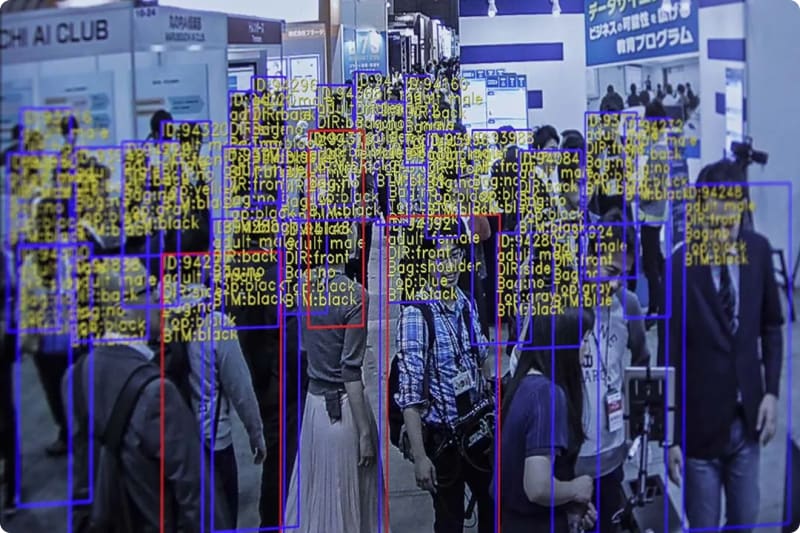
Compounding this issue is the rise of AI-generated content, an ocean of digital nothingness that's rapidly suffocating dwindling sources of genuine human creativity. This flood of fabricated content not only dilutes the quality of information available but also serves as a breeding ground for misinformation. The algorithms designed to serve us relevant content are now puppeteered by those with the deepest pockets, ensuring that truth and authenticity are casualties in the war for our attention. In this environment, the quest for genuine connection and reliable information becomes a Sisyphean task, as users are left to navigate a labyrinth engineered to disorient and monetize rather than enlighten and unite.
The erosion of privacy and the rise of surveillance capitalism have not only undermined the internet's potential as a tool for free expression but have also created a breeding ground for cybercrime and identity theft. As our personal data is harvested and sold to the highest bidder, we become increasingly vulnerable to financial fraud, blackmail, and other forms of digital exploitation. The failure of tech companies to prioritize user security and privacy has created a virtual Wild West, where criminals can operate with impunity, leaving ordinary users to bear the burden of protecting themselves in an increasingly hostile digital landscape.
Imagine, if you will, a world where the pursuit of knowledge is not a battleground of ads, paywalls, and manipulated algorithms but a serene journey guided by the sole aim of enlightenment. This world exists, and it's called the public library—a bastion of democracy where knowledge flows freely, untainted by the greed that has besieged the internet. Unlike the web's ad-laden labyrinth, libraries offer unfettered access to a wealth of information, serving as a sanctuary where the human thirst for knowledge is quenched without the poison of commercial influence. I do not need to accept cookies, to close a pop-up, to worry about a book stealing my identity, nor to wonder if what I’m reading is even from a human hand. The internet could have been the digital equivalent of a public library, and it was our library, for a time. Now it is symbolic of the path not taken. The internet and its malignant path of development signals not just a technological failure but a moral one.