Akbar the Great: His Vision and Legacy
Spring 2024
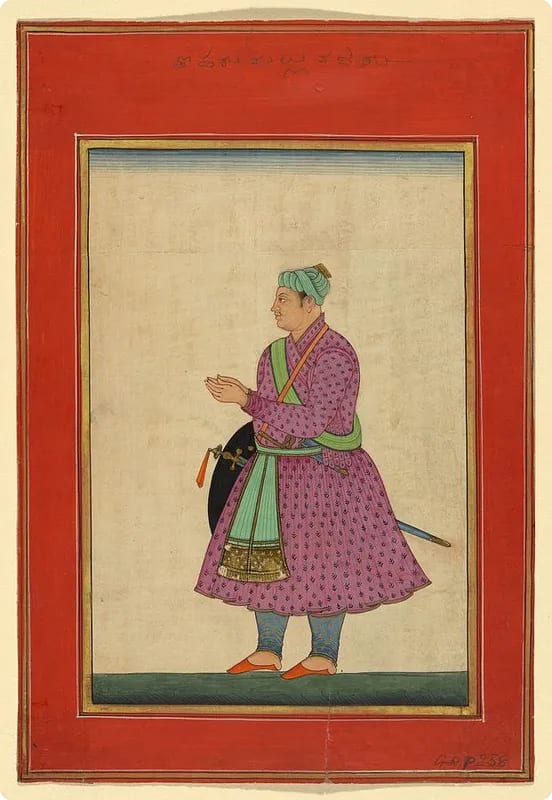
Young Akbar's ascension in 1556 marked the beginning of a transformative era for the Mughal Empire. Inheriting a realm fraught with internal strife and external challenges, he embarked on a five-decade reign that cemented the empire's power and left an indelible mark on its architecture, governance, and cultural fabric. However, a closer look reveals a reign far more intricate than found in the romanticized portrayal depicted in the film Jodhaa Akbar or in the emphasized contempt that mischaracterizes Akbar in Mughal-e-Azam. While such movies celebrate a perspective of Akbar that is beneficial to their own narratives, they often overlook the complexities of his personal relationships and the true ramifications of his policies. Placed in contrast to these mediatic dramatizations, Emperor Akbar's reign stands out for its substantial administrative, military, and religious reforms, culminating in a legacy of tolerant empire-building amidst personal and societal challenges.
A pivotal first step in Akbar’s administrative innovations is undeniably the development of a more integrated governmental model through the Mansabdari system. The Mansabdari system was a novel approach to governance that assigned ranks (mansabs) to nobles, military commanders, and officials, effectively determining their pay scale and the number of cavalrymen they were responsible for maintaining. This system was more than just an administrative tool; it was a strategic framework designed to integrate the empire's military and bureaucratic functions under a unified hierarchy. By doing so, Akbar was able to streamline the administrative and military apparatus of the Mughal Empire, ensuring efficiency and responsiveness across its vast expanse.

One of the system's key features was its ability to create a hierarchy that provided the emperor with a "finely regulated process for rewarding through promotion or punishing through stagnation or demotion in mansab" (Fisher 101). This aspect of the Mansabdari system helped centralize military and governmental authority into Akbar's hands, enabling Akbar to maintain loyalty and wield control over the diverse and sprawling empire. The system also facilitated the integration of various cultural and regional groups into the empire's governance structure, further promoting stability and loyalty among the empire's elite.
However, the significant portion of the empire's budget dedicated to the Mansabdars' salaries and land grants highlighted the critical need for an effective system of revenue collection. Akbar's reforms, including the standardization of the currency and the overhaul of the tax system, allowed for a more systematic and fair approach to revenue collection. By implementing a uniform tax system grounded in the accurate measurement and yield of lands, Akbar replaced previous arbitrary and often burdensome methods. These reforms not only boosted the empire's income but also encouraged agricultural advancement and economic stability. The unification of currency under his rule facilitated both domestic and international trade, enhancing the empire's prosperity.
This strategic approach is emphasized by historic accounts that "all land was measured according to a uniform imperial standard to determine the agricultural yield rate. Then, based on data gathered from a ten-year period on the yield and price of crops in any particular locality, tax rates were established with greater accuracy than ever before" (Asher and Talbot 128). Asher and Talbot’s detailing not only substantiates the methodical nature of Akbar's tax reforms but also illustrates the empirical basis of his fiscal policies. By grounding tax rates in actual agricultural yields and market prices, Akbar's reforms ensured a fairer distribution of the tax burden, which in turn would have contributed to the economic stability and growth of the Mughal Empire.
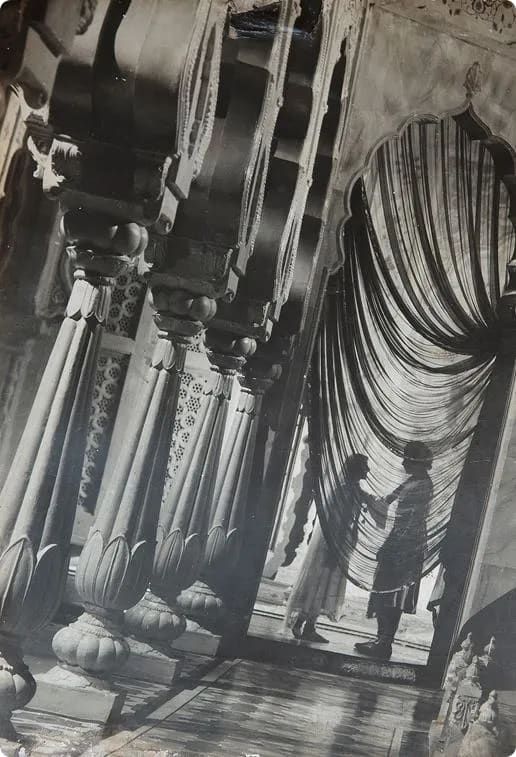
Emperor Akbar's reign is distinguished not just for his administrative and economic innovations but also for his substantial contributions to the cultural and religious fabric of the Mughal Empire. His era is marked by a flourish of architectural projects that reflect his visionary leadership and dedication to fostering a culture of inclusivity. Among his achievements, the construction of Fatehpur Sikri stands as a testament to Akbar's architectural ambition and his ideology of cultural integration. Built as a new capital for the Mughal Empire from 1569 to 1585, Fatehpur Sikri was more than a political capital; it was a manifestation of Akbar's experiments with art and architecture, showcasing a blend of Persian and Indian architectural traditions under his auspices.
In fact, "Fatehpur Sikri is considerably more Indian in appearance than is Humayun's Tomb or even the Agra Fort's Jahangiri Mahal… he was concerned with retaining the favor of his Indian Muslim and Hindu subjects while correspondingly reducing the power of the dominant Central Asian and Iranian nobility" (Asher and Talbot 134).
Asher and Talbot’s description of the new capital not only emphasizes the architectural synthesis that characterizes Fatehpur Sikri but also highlights Akbar's strategic use of architecture to promote a sense of inclusivity and unity among the empire's diverse populace. By deliberately incorporating more Indian elements into the city's design, Akbar was making a clear statement about his respect for and integration of Indian culture into the broader Mughal identity. The meticulous attention to aesthetic detail, coupled with the symbolic use of architectural features such as red sandstone, the Charbagh layout, and intricate jali work, exemplified Akbar's imperial authority while simultaneously conveying his spiritual ideals and vision for a harmonious society.

Central to this vision was the policy of Sulh-i-Kul, translated as “universal toleration”. This policy saw that “by about 1580 non-Muslims were officially accorded the same rights as muslims" (Asher and Talbot 129). Sulh-i-Kul was emblematic of Akbar's inclusive governance, aimed at promoting an ethos of tolerance and dialogue among the empire's diverse religious communities. This approach was revolutionary in a period characterized by religious exclusivity and conflict, marking a significant departure from the orthodox practices of his predecessors and contemporaries.
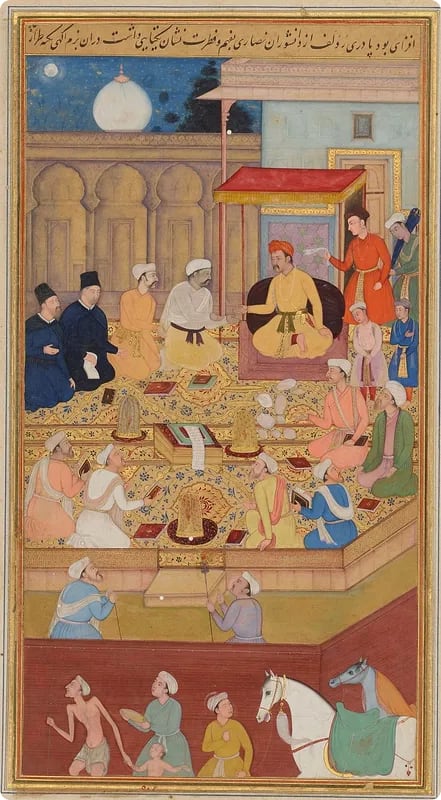
Akbar's Sulh-i-Kul philosophy, which recognized the shared ethical core of all religions, informed pivotal changes in his governance, such as the abolition of the Jizya tax on non-Muslims, fostering an era of lessened division and greater interfaith harmony. His court in Fatehpur Sikri became a hub of eclectic religious discourse, drawing thinkers from a spectrum of faiths—Hindus, Jains, Christians, Zoroastrians, and multiple Muslim sects. It was in the Ibadat Khana, Akbar's "House of Worship," that these diverse groups converged for dialogue, shaping the Sulh-i-Kul policy and underscoring Akbar's commitment to a unified, tolerant empire through the discovery of common spiritual ground (Fisher 122).
Akbar's pursuit of religious inclusivity and his creation of a syncretic faith, blending various religious elements, paradoxically led to significant backlash from orthodox Muslims. This shift from initial Sunni adherence to a broader, ecumenical approach, as described by Fisher, was “to an extent unprecedented for either his Mughal predecessors or Delhi sultans” (Fisher 115). His policies, particularly the establishment of Sulh-i-Kul and the Ibadat Khana, intended to foster religious understanding, were seen by some as undermining Islamic purity. Furthermore, Akbar's 1579 decree, claiming ultimate authority in religious ambiguities, directly challenged the Sunni 'ulama's authority (Fisher 116). This move, positioning him as a quasi-religious figure, was in stark contrast with orthodox Islamic principles, which vehemently oppose any intermediation between the believer and God, thereby fueling accusations of heresy against him.
Perhaps the most controversial of Akbar's religious innovations was the introduction of Din-i Ilahi, a syncretic faith that drew upon elements of Islam, Hinduism, Zoroastrianism, and Christianity. While not a formal religion, Din-i Ilahi represented Akbar's attempt to create a spiritual fellowship that transcended religious divisions. However, to orthodox Muslims, this was seen as a heretical endeavor that diluted the monotheistic essence of Islam. The requirement for followers of Din-i Ilahi to show allegiance to Akbar was particularly contentious, as it seemed to elevate the emperor to a divine status, conflicting with the Islamic tenet of absolute monotheism (Fisher 137).
Asher and Talbot explain, “Akbar's liberal religious policies caused enough dissent among the Afghan-descended population of eastern India to result in widespread rebellion there in the early 1580s” (Asher and Talbot 129). The eruption of a true religious upheaval is evidence of the deep divisions that Akbar's religious policies created, marking him as a figure of controversy among orthodox Muslims who regarded his innovations as a threat to the integrity of Islamic faith.
Against the backdrop of academic accounts, which underscore the deep divisions and unrest stirred by Akbar's religious policies, the film Jodhaa Akbar presents a contrasting, simplified portrayal of his reign, focusing on his achievements and ideals but largely sidestepping the complexities and controversies that marked his rule. For instance, when Akbar abolishes the pilgrim tax, proclaiming, "The happiness of life cannot be divided on religious grounds. I am a follower of Islam, a Muslim! And yet, I bow my head, in respect for every religion" (Jodhaa Akbar, Gowariker, 2008). The film emphasizes his commitment to religious harmony. However, historical accounts reveal a more nuanced scenario where Akbar's liberal religious policies, including the abolition of Jizya and the promotion of Sulh-i-Kul, led to significant dissent and rebellion among the orthodox Muslims and Afghan-descended population, highlighting the substantial opposition he faced within his empire.
Similarly, the movie scene where Akbar opts for a duel with Sharifuddin to "prevent bloodshed," stating, "This is no way to crush a revolt. Why did you accept? To prevent bloodshed" (Jodhaa Akbar, Gowariker, 2008), is portrayed as a noble act of mercy. Yet, this depiction overlooks the military campaigns and the use of force that were integral to Akbar's expansion and consolidation of power. For example, Fisher's account details Akbar's military expeditions against regional rulers and the displacement of resistant rulers, which contrasts with the movie's portrayal of Akbar primarily as a benevolent and merciful ruler. These examples underscore how the film Jodhaa Akbar, while capturing certain ideals of Akbar's reign, omits the full complexity and the contentious aspects of his policies and rule.
In "Islamicate Cultures of Bombay Cinema," Bhaskar & Allen analyze Jodhaa Akbar, noting Gowariker's portrayal of Akbar as a ruler who "conquers not simply by force but through mercy and by winning over opponents" (Bhaskar and Allen 156). This depiction, while historically resonant, idealizes Akbar, emphasizing his legendary status but oversimplifying the complexities of his reign. The film's romantic narrative, particularly through Akbar and Jodhaa's relationship, reinforces this perspective. Jodhaa's insistence on "preserving her self-respect and the integrity of her religious practices within the marriage alliance" illustrates the intertwining of personal conviction with broader political themes, suggesting that "the personal is the political, and the political is also deeply personal" (Bhaskar and Allen 154). However, in doing so, Jodhaa Akbar tends to gloss over the more contentious aspects of Akbar's rule, presenting a somewhat sanitized version of history that focuses more on his enlightened vision than the real challenges and conflicts of his time.
In a similar fashion, the film Mughal-e-Azam, while celebrated for its artistic brilliance, often favored narrative necessity over historical fidelity. The film depicts Akbar as a stern, unyielding figure, particularly in familial matters and his response to Salim's defiance, as illustrated in his forceful declaration, “we accept this blind revolt... we shall fight and I shall lead the army myself” (Mughal-e-Azam, K. Asif, 1960). While it’s true Akbar displayed decisive military leadership during Salim's rebellion in 1600, this epitomizes how the film emphasizes only a vengeful scorn and a determination to uphold Mughal sovereignty, glossing over the historic depths of Akbar’s later rule and his succession struggles.
As Akbar approached his twilight years, he struggled with the delicate balance of ensuring his visionary goals for the Mughal empire and his being a father. Akbar's relationship with his son Salim, later known as Emperor Jahangir, was notably problematic, characterized by a blend of ambition, rebellion, and eventual reconciliation. These cyclical troubles were largely spurred on by the strategies employed by the fact “the Timurid tradition did not recognize the right of the eldest son to automatically accede to the throne, making years of court intrigue inevitable before the succession was determined” (Asher and Talbot 153). One specific strategy used to cool hostilities was Akbar's decision to appoint his sons to governorships in distant regions, hoping the distance between them would mediate the hostilities between the vying successors.
However, the appointment of Salim and his brothers to these positions only led to further strife. “As their subjects bemoaned, these princely governors and their guardians asserted arbitrary and oppressive authority, amassing resources to strengthen their respective factions for the coming succession struggle” (Fisher 144). This passage underscores the complexities of Akbar's strategy, as it inadvertently contributed to further tensions by enabling Salim and his brothers to exercise their authority in ways that sometimes conflicted with Akbar's broader vision for the empire.
Consequently, by the late 1590s, Salim, impatient to ascend to the throne and frustrated by his father's policies and advisors, began to challenge Akbar's authority. In 1600, Salim revolted and established a parallel court in his assigned Allahabad, declaring himself emperor. This rebellion was not only a challenge to Akbar's rule but also a reflection of the underlying tensions within the Mughal court; a culmination of the succession disputes, knowledge of Akbar’s waning health, and the ambitions of powerful nobles. The rebellion, however, was short-lived.
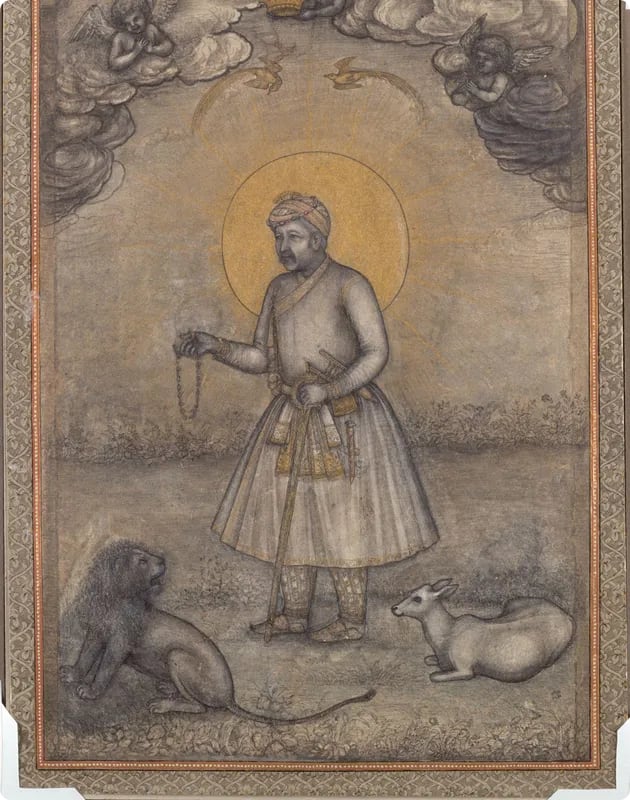
Despite the challenges and as not accurately depicted in Mughal-e-Aza, in 1605 “as Akbar’s death approached, Salim humbly resubmitted himself to his father’s authority, accepted humiliating but brief chastisement, and, with the intercession of influential Mughal women, received forgiveness just before Akbar died” (Fisher 143). In the same year, Salim came to secure the throne, largely due to the absence of a viable alternative, “the diverse network of supporters Salim had built up over the years”, and the foundational work Akbar had done in securing the loyalty of key factions within the empire through strategic marriages, political alliances, and his cultivation of a diverse and inclusive court culture (Asher and Talbot 153). Salim's rise to power was thus facilitated by the very strategies Akbar employed to strengthen the empire, even if they also contributed to the complexities of their father-son relationship.
In conclusion, Emperor Akbar's reign, as explored by historians like Fisher and as artistically portrayed in Jodhaa Akbar and Mughal-e-Azam, offers a complex picture of a transformative ruler. In his pursuit of a harmonious imperial vision, his administrative and architectural innovations set the stage for the Mughal Empire's prosperity at the expense of his many patriarchal duties; and while his progressive religious policies were intended to foster inclusivity, they instead sparked significant controversy. The films, while capturing shreds of truth in Akbar's leadership, tend to either idealize or dramatize his reign, glossing over the many intricacies and challenges he faced. Thus, Akbar’s legacy, as captured in academic discourse and popular media, remains a compelling study of a ruler who navigated the intricacies of empire-building with a blend of innovation, tolerance, and strategic acumen.
Works Cited
- Asher, Catherine B., and Cynthia Talbot. India before Europe. Cambridge University Press, 2006.
- Asif, K., director. Mughal-e-Azam. Sterling Investment Corporation, 1960.
- Bhaskar, I., and Allen, R., editors. Bombay Cinema’s Islamicate Histories. Intellect, 2022. JSTOR, http://www.jstor.org/stable/j.ctv36xvt53.
- Fisher, Michael H. The Mughal Empire. I.B.Tauris Short Histories. I.B.Tauris & Co. Ltd, 2016.
- Gowariker, Ashutosh, director. Jodhaa Akbar. UTV Motion Pictures and Ashutosh Gowariker Productions, 2008.